



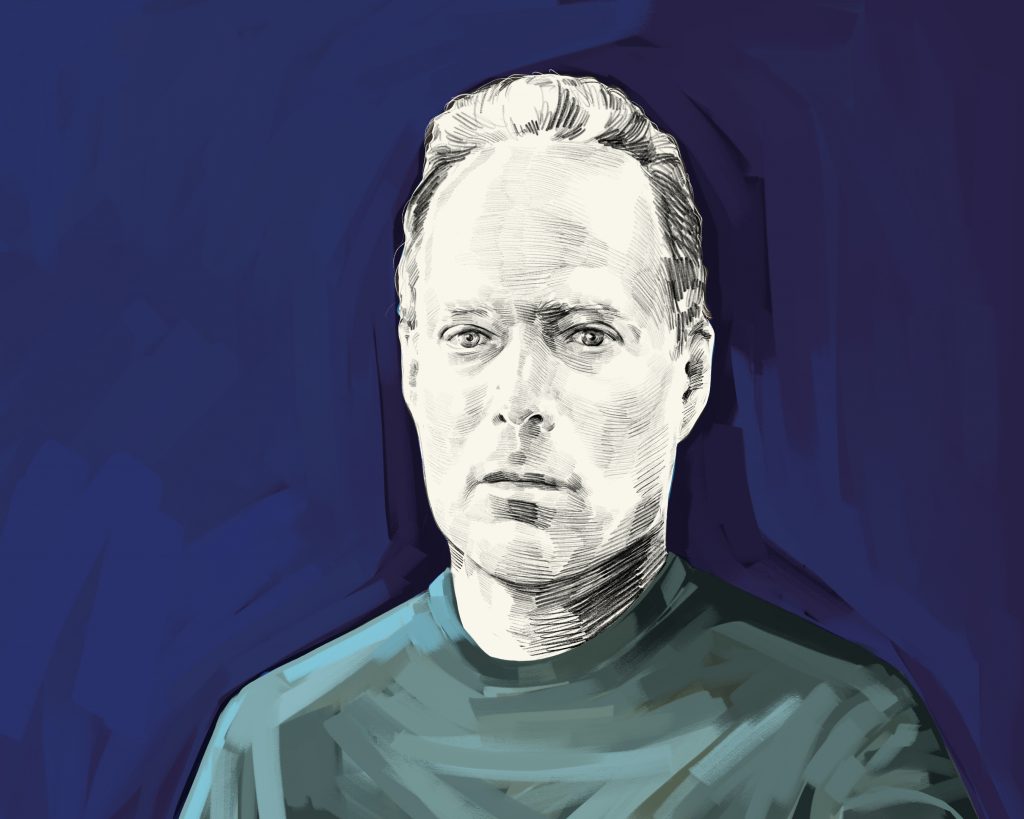
“It’s freedom from oppression that you have a right to; it’s not freedom from obligation.”
— Sebastian Junger
Sebastian Junger (@sebastianjunger) is the New York Times bestselling author of Tribe, War, A Death in Belmont, Fire, and The Perfect Storm, and codirector of the documentary film Restrepo, which was nominated for an Academy Award. He is also the winner of a Peabody Award and the National Magazine Award for Reporting. He’s based in New York City and Cape Cod. His newest book is titled Freedom.
For more Sebastian, you can find our first conversation from 2016 at tim-blog-development.mystagingwebsite.com/sebastian.
Please enjoy!
Listen to the episode on Apple Podcasts, Spotify, Overcast, Stitcher, Castbox, Google Podcasts, or on your favorite podcast platform.
Brought to you by Wealthfront automated investing.
You can find the transcript of this episode here. Transcripts of all episodes can be found here.



This episode is brought to you by Wealthfront! Wealthfront is a financial services platform that offers services to help you save and invest your money. Right now, your cash can earn 3.30% APY—that’s the Annual Percentage Yield—with the Wealthfront Cash Account from its network of program banks. That’s 8 times more interest than a typical savings account at a bank, according to FDIC.gov as of 1/22/2026 (Wealthfront’s 3.30% APY vs. 0.39% average savings rate). Right now, for a limited time, Wealthfront is offering new clients that use my sign-up link an additional 0.75% boost over the base rate for three months, meaning you can get up to 4.05% APY, limited to $150,000 in deposits. Terms & Conditions apply. Visit Wealthfront.com/Tim to get started.
The Cash Account, which is not a deposit account, is offered by Wealthfront Brokerage LLC (“WFB”), member FINRA/SIPC. Wealthfront Brokerage is not a bank. The 3.30% Base APY on cash deposits is as of January 30, 2026, is representative, subject to change, and requires no minimum balance. The overall boosted rate is subject to change if the base rate decreases during the three-month promotional period. Tim Ferriss, who’s not a client, receives cash compensation from Wealthfront Brokerage LLC for advertising and holds a non-controlling equity interest in the corporate parent of Wealthfront Brokerage LLC, which creates an incentive that results in a conflict of interest. Tim expresses his own opinions and Wealthfront does not endorse, sponsor, or promote them. This ad may not reflect the experience of other Cash Account clients, and similar outcomes are not guaranteed. Investment advisory services are provided by Wealthfront Advisers LLC, an SEC-registered investment adviser. Securities investments: not bank deposits, not bank-guaranteed or FDIC-insured, and may lose value. See full disclosures here.
What was your favorite quote or lesson from this episode? Please let me know in the comments.
SCROLL BELOW FOR LINKS AND SHOW NOTES…
Want to hear the last time Sebastian was on this show? Lend an ear to our conversation in which we discussed Thomas Paine and Stoicism, how to develop a writing style, the psychiatric effects of war, the lonely nature of society, how to really “support the troops,” and much more.
SELECTED LINKS FROM THE EPISODE
- Connect with Sebastian Junger:
Website | Twitter | Facebook | Instagram
- Freedom by Sebastian Junger
- Lessons from War, Tribal Societies, and a Non-Fiction Life (Sebastian Junger) | The Tim Ferriss Show #161
- Tribe: On Homecoming and Belonging by Sebastian Junger
- War by Sebastian Junger
- A Death in Belmont (P.S.) by Sebastian Junger
- Fire by Sebastian Junger
- The Perfect Storm: A True Story of Men Against the Sea by Sebastian Junger
- Restrepo
- The Last Patrol | Prime Video
- Aneurysm | Johns Hopkins Medicine
- How to Play the Accordion (with Pictures) | wikiHow
- The Beginner’s Guide to Boxing | Expert Boxing
- Difference Between Accordion and Bandoneon | Julian Rowlands
- Danny Boy, for Accordion Practice | Music for Fun
- How Music ‘Awakens’ Alzheimer’s Patients | Live Science
- 4 Types of Parenting Styles and Their Effects | Parenting for Brain
- About the BMWC | Bob Marshall Wilderness Foundation
- Myths and Truths About Co-Sleeping | The Bump
- How to Overcome Fear – Lessons from Firefighter and Luger, Caroline Paul | The Tim Ferriss Show #151
- Radical Hope: Ethics in the Face of Cultural Devastation by Jonathan Lear
- Freedom | Merriam-Webster
- The Tiguex War of New Mexico | Legends of America
- Apache Tribes | Indians.org
- Fastest 1,000 Miles Ultra Distance (Men) | Guinness World Records
- MMA Top 10 Small vs. Big Fighters Knockouts | Top MMA 007
- A Historical Timeline of Afghanistan | PBS NewsHour
- Some Apes Jane Goodall Studied Fought a Years-Long War | AV Club
- Eight Reasons the Americans Won the Revolutionary War | The History Junkie
- A Brief Overview of the War of 1812 | American Battlefield Trust
- History of the American Labor Movement | ThoughtCo.
- The Irish Potato Famine (1845–1852) | Simple History
- January 12, 1912: Bread and Roses Strike Begins | Mass Moments
- Libya: Journalists Killed in Misrata | Human Rights Watch
- Pontiac’s War and the Paxton Boys | Encyclopedia of Greater Philadelphia
- The 15 Worst Torture Devices In History | Gizmodo Australia
- Flayed Alive by Indians by S.C. Turnbo | Springfield-Greene County Library
- The Inquisition: A Model for Modern Interrogators | NPR
- On Feb 07, 1904: Black Man and Woman Brutally Lynched in Mississippi Delta | Equal Justice Initiative
- Why 90 Percent of Danish Jews Survived the Holocaust | History
- D-Day Casualties: Operation Overlord by the Numbers | Warfare History Network
- Ecclesiastes 3:18 KJV | Bible Gateway
- Antisemitism Explained | Philadelphia Holocaust Memorial Plaza
- Gini Coefficient | Investopedia
- Yamna Culture: The Invasion That Wiped Out Every Man from Spain 4,500 Years Ago | El País
- Rubberbandits Guide to the 1916 Easter Rising | Vimeo
- Michael Mallin Wrote a Moving Letter to His Family in 1916 on the Eve of His Execution | Irish Examiner
- Drought Returns to Huge Swaths of US Fueling Fears of a Thirsty Future | The Pew Charitable Trusts
- Boy Scouts of America
- Guide to Donating Blood During Coronavirus: Who Can Donate, Where to Go | Health.com
- Califoria Lockdown Protest | All Gas No Brakes
- United We Serve?: The Debate Over National Service | The Brookings Institution
- Where History Meets Science in Parenting | Evolutionary Parenting
SHOW NOTES
- Sebastian shares how he barely survived a recent experience he wouldn’t wish on anyone: an undiagnosed aneurysm in his pancreatic artery. [06:15]
- What profound truths were made clear in the aftermath of this traumatic brush with death? [09:21]
- Sebastian has always been willing to take risks (like reporting from war-torn countries). Did becoming a father and surviving the aneurysm change this? [12:48]
- What lessons did Sebastian learn from picking up two hobbies no ordinary 51-year-old would pursue: boxing and playing the accordion? What itch does boxing seem to scratch? [16:07]
- What compelled Sebastian to pick up the accordion, and how has it rewarded him? [18:37]
- How successful have Sebastian’s efforts to raise his two daughters in an “elemental, mindful, tribal manner” been thus far, and what is his foray into fatherhood teaching him? Why does he think he’s getting more from the experience in his 50s than he would have in his 20s? [21:54]
- How does Sebastian relate to the aging process of a warrior, and how did Crow chief Plenty Coups come to understand the role as one of protection rather than ego-driven aggression in order to ensure the survival of his own tribe into the 20th century? [28:42]
- What prompted Sebastian to write his new book, Freedom, and why is it divided into three sections: Run, Fight, and Think? [39:26]
- Why is the inclusion of women in insurgencies crucial to their success? [47:47]
- Sebastian shares the story behind The Last Patrol, and how walking hundreds of miles along American railroad tracks gave him an unparalleled sense of freedom. [52:05]
- Did the structure of Freedom change from conception to finished product? [57:44]
- While studying history and witnessing firsthand how terrible human beings can be to other human beings, how does Sebastian refrain from withdrawing into full-blown nihilism? [1:00:48]
- As an atheist, why did Sebastian choose to preface Freedom with a verse from the Bible? [1:07:21]
- On the mental trick that humans have used throughout history to downgrade people from “other” groups to subhuman status in order to remorselessly exploit, subjugate, torture, or kill them. [1:09:28]
- What is the Gini coefficient, and how does it tie in with the discomforting etymology of the word “freedom” and the relative inequality of history’s most dominant empires? [1:12:13]
- What does Sebastian hope people will take away from Freedom or perhaps ponder more closely after reading it? [1:19:07]
- As free individuals, what do we owe our society? [1:24:42]
- An ask of the audience: figure out what you owe. [1:30:51]
- Sebastian’s advice, as a new father, to aspiring parents. [1:34:31]
- Parting thoughts. [1:36:39]

Comment Rules: Remember what Fonzie was like? Cool. That's how we're gonna be — cool. Critical is fine, but if you're rude, we'll delete your stuff. Please do not put your URL in the comment text and please use your PERSONAL name or initials and not your business name, as the latter comes off like spam. Have fun and thanks for adding to the conversation! (Thanks to Brian Oberkirch for the inspiration.)
Tim – Sebastian Junger’s 1st episode with you was my #1 favorite podcast that you’ve done thus far (and yes, I’ve listened to all of them). As you can imagine, I was excited to see a follow-up episode and it surpassed all expectations! Sebastian is such a moving storyteller, and you ask the perfect follow up questions. Also good luck to you and your girlfriend on your next possible adventure, happy to hear about that!!
DUDE! That animation from the 6 bullet surprise was – just wow. Thank you, and Joe P. for the recommendation.
To my shame, I have to admit I've never heard of Sebastian Junger until this podcast. As always, Tim, you shine a light on amazing people and share it with the world. I really appreciate it! Thank you!
I've read Junger before, and enjoyed his writing. But I can't take this interview serious. He begins by stating "I'm an atheist, I don't believe in anything that you can't measure or observe" and then spends the next five minutes contradicting himself by describing an internal transformation – i.e. something that cannot be measured or observed. Sebastian, you have to do the work mate. Start with C.S. Lewis, Mere Christianity, or even Miracles – although the latter takes some effort. Best of luck.
Take Sebastian’s recommendation to give blood to heart. He is absolutely correct about its ability to make you feel good about contributing to society and literally saving lives. I have always told people there is no easier way to obtain that good vibe. I’m O- and so used to give double red which can only be done every 4 months, so you basically give up call it 6 hours a year with travel to save perhaps multiple lives. I can no longer give because at 30 I discovered I have a rare autoimmune disorder that affects my heart and my doc told me I’d done my part and to stop, but 9 years later I still genuinely miss having that opportunity. I miss walking out of the Red Cross with a sense of connection to humanity, feeling a high because I had made a contribution (even if perhaps a little sheepishly for feeling so good about putting forth such little effort). So please sign up to donate today!
Tim I really enjoy the guests you have on your show. I found Sebastian to be captivating and his stories and ideas of life to be so profound. I found myself getting irritated listening to the podcast though because I felt like your responses to Sebastian did not indicate that you were listening to him at all. I felt like Sebastian would share an intimate detail of his life, something vulnerable and exposing and your response was to jump to the next question. I struggle in my own personal life when I am not acknowledged or really listened to so this could be the root of my frustration. I am curious though in your interviews how do you listen and acknowledge your guests?
His name is Tim. And you have also a 3 letters name Cat. 3 letters is the basis for success.
isn't that an self reflective observaiton he is making