



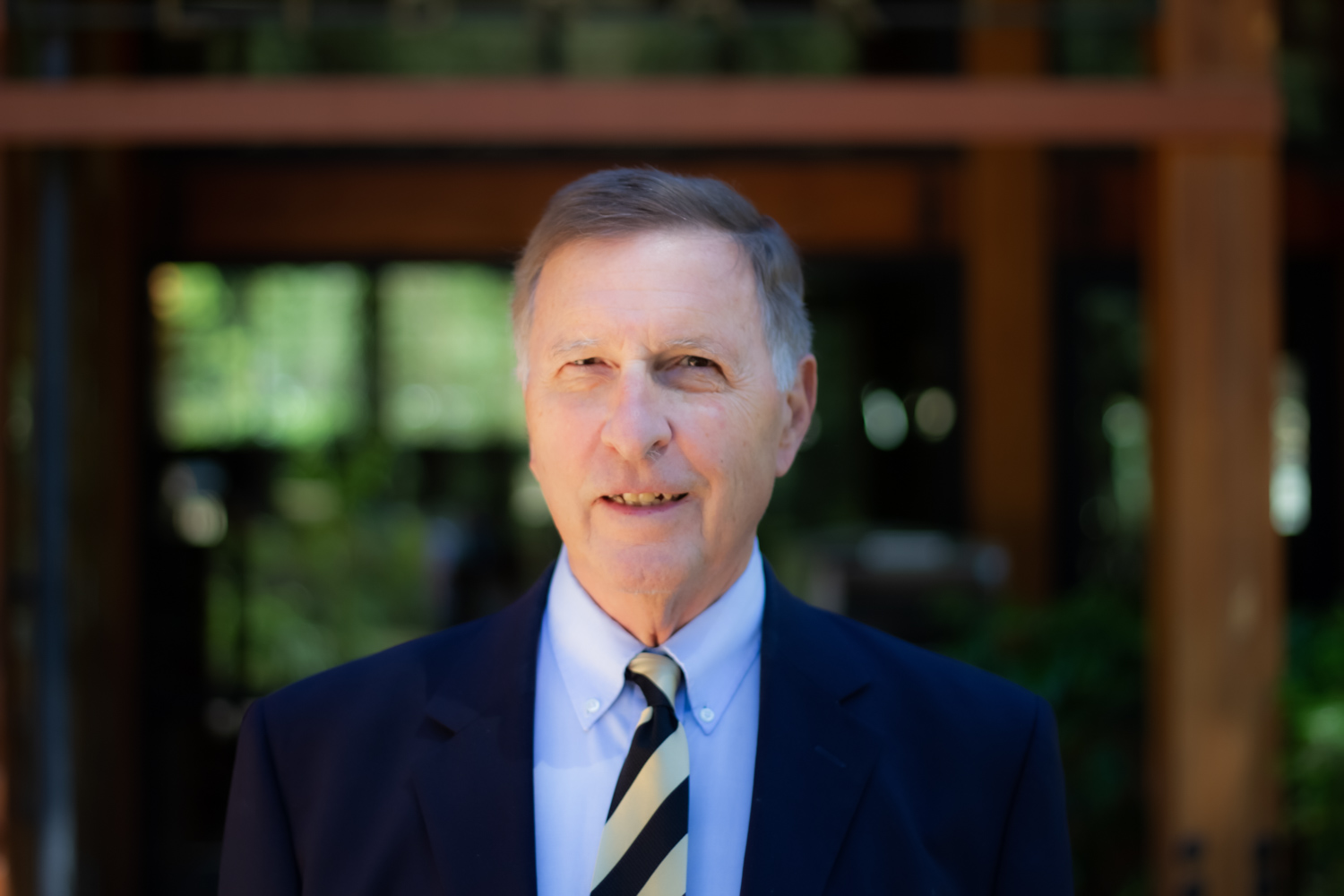
“Entrepreneurship isn’t about starting companies. Entrepreneurship is an approach to life.” — Ed Zschau
Ed Zschau is the Interim President of Sierra Nevada College, and he brings to the college 17 years of leading technology companies. He founded System Industries in Palo Alto, California in 1969, and as its CEO led it to a successful IPO in 1980. In the 1990s, he was the General Manager of the IBM Storage Systems Division headquartered in San Jose, California. Ed has a total of 10 years of teaching experience as a professor in the graduate business schools at Stanford University and Harvard University, and he has taught high tech entrepreneurship courses for a total of 22 years in the engineering schools at Princeton University, Caltech, and University of Nevada, Reno. In addition to serving on the boards of major public companies such as Reader’s Digest and StarTek, Ed has helped to start and build several technology companies during the past 20 years, some of which were founded and led by his former students.
In the 1980s, Ed represented the Silicon Valley area of California for two terms in the US House of Representatives, serving on the House Foreign Affairs Committee. Also, during the 1980s, he was a General Partner of Brentwood Associates, a venture capital firm, and he was the Founding Chairman of The Tech Interactive, (formerly The Tech Museum of Innovation), a non-profit educational institution in San Jose, California.
Ed holds an A.B. degree (cum laude) in Philosophy (bridging with Physics) from Princeton University, as well as M.B.A., M.S. (Statistics), and Ph.D. degrees from Stanford University and a Doctor of Laws degree (Honoris Causa) from the University of San Francisco. Currently, he is a Senior Fellow of the California Council on Science and Technology.
Please enjoy!
Listen to the episode on Apple Podcasts, Spotify, Stitcher, Overcast, Castbox, or on your favorite podcast platform.
You can find the transcript of this episode here. Transcripts of all episodes can be found here.
This episode is brought to you by 99designs, the global creative platform by Vista that makes it easy for designers and clients to work together to create designs they love. You can work with multiple designers at once to get a bunch of different ideas or hire the perfect designer for your project based on their style and industry specialization. It’s simple to review concepts and leave feedback so you’ll end up with a design that you’re happy with. Click this link and get $20 off plus a $99 upgrade.
This episode is brought to you by Peloton Row! Peloton Row delivers personalized rowing workouts to help you learn and master your stroke. Right now is the perfect time to get rowing with Peloton Row. Peloton Row offers a variety of classes for all levels plus game-changing features that help you get rowing or advance the rowing you can already do. Explore Peloton Row at OnePeloton.com/Row.
Want to hear another episode with someone who brings music to every aspect of their life? Listen to my conversation with Jamie Foxx in which we discuss learning lessons from our elders, parenting, workouts, and more.
QUESTION(S) OF THE DAY: What was your favorite quote or lesson from this episode? Please let me know in the comments.
SCROLL BELOW FOR LINKS AND SHOW NOTES…
SELECTED LINKS FROM THE EPISODE
- Sierra Nevada College
- System Industries
- IBM
- ELE 491: High-Tech Entrepreneurship, Princeton University
- Harvard University
- Princeton University
- Caltech
- University of Nevada, Reno
- Reader’s Digest
- StarTek
- US House of Representatives
- Brentwood Associates
- The TECH Interactive
- University of San Francisco
- California Council on Science and Technology
- Omaha Knights, Ice Hockey Wiki
- 10 Versions of Murphy’s Law for Universal “Truths“, ThoughtCo.
- “If You Fail To Prepare You Are Preparing To Fail”, Quote Investigator
- Case Method Teaching, Stanford University
- Harvard Business School
- Stanford Graduate School of Business
- The McPhee Syllabus, The Millions
- Kant’s Views on Space and Time, Stanford Encyclopedia of Philosophy
- Einstein’s Theory of General Relativity: A Simplified Explanation, Space
- Newton’s Views on Space, Time, and Motion, Stanford Encyclopedia of Philosophy
- The Devastating Impact of the 1961 Plane Crash That Wiped Out the Entire U.S. Figure Skating Team, Smithsonian.com
- Officer Candidate School (OCS), Newport, RI
- Extemporaneous Speaking: Things to Know, ForCom
- 113 Extemporaneous Speech Topics, My Speech Class
- Alexander Hamilton and Aaron Burr’s Duel, American Experience, PBS
- American Electronics Association, NNDB
- How Silicon Valley Hacked the Economy, The Nation
- House Committee on Ways and Means, GovTrack
- 1986 United States Senate Election in California, Wikipedia
- Zschau Named CEO of Censtor, a Disk Maker, Los Angeles Times
- Boy Scouts of America
- The 4-Hour Workweek: Escape 9-5, Live Anywhere, and Join the New Rich by Timothy Ferriss
- The 4-Hour Body: An Uncommon Guide to Rapid Fat-Loss, Incredible Sex, and Becoming Superhuman by Timothy Ferriss
- Benjamin Franklin: An American Life by Walter Isaacson
- Steve Jobs by Walter Isaacson
- Einstein: His Life and Universe by Walter Isaacson
- The Wright Brothers by David McCullough
- Building on Bedrock: What Sam Walton, Walt Disney, and Other Great Self-Made Entrepreneurs Can Teach Us About Building Valuable Companies by Derek Lidow
- The Walmart Museum
- Income Share Agreements: What Students Should Know Before Signing, Nerdwallet
- Lambda School
- Mission Impossible
- The Steps of the Simplex Algorithm, HEC Montreal
- My Way by Frank Sinatra
SHOW NOTES
- The Princeton engineering course in which Dr. Zschau and I met, and how I convinced him to let me in. [06:40]
- Ed’s background in competitive figure skating and what it taught him about the value of practice, dedication, persistence, and determination. [09:29]
- Where did Ed’s meticulous attention to detail originate? [14:02]
- Learning by doing: the many benefits of the case method. [18:13]
- How does Ed define entrepreneurship? [22:31]
- What’s the role of optimism in entrepreneurship — and, by extension, life — where things can and often do go horribly wrong? [24:57]
- As a teenager going into young adulthood, what did Ed think he was going to be when he grew up? [27:17]
- As an aspiring physics philosopher obsessed with Einstein, what drew Ed to Princeton as an undergrad? Did he find it to be the challenge he was expecting? [29:23]
- How did Ed get into teaching, and what led to his belief that career planning is overrated? [32:27]
- After seizing the opportunity to teach when he’d never taught before, how did Ed actually learn to become good at it? In what ways did his high school experience with extemporaneous speaking help? [38:01]
- What extemporaneous speaking competitively taught Ed about preparation and adaptation. [41:28]
- How does Ed think about focusing for extended periods or opening himself to opportunities? [46:35]
- Why did Ed decide to run for Congress? [48:55]
- What were the two advantages of committing to serve a maximum of three terms — if elected — in the House of Representatives? Why does he, in retrospect, believe he’s made more of a contribution to a better future as a professor than he would have had he won his campaign to become a senator? [54:11]
- After losing his Senate race to the incumbent by a narrow margin, what were the following days and weeks like for Ed? As someone who was generally used to success from his efforts, what did he say to himself at this point? [58:14]
- What was Ed’s decision process like when trading his investor hat for that of a CEO at this time? Over the course of his life, what’s been the primary motivation for most of his decisions? [1:00:42]
- How does Ed differentiate between the things that will have the greatest impact for others and feeling peer-pressured to commit to something? How does he ensure his skills are put to their most efficient use? [1:03:23]
- How does Ed’s parenting style compare to his deliberate teaching style? [1:07:23]
- Ed believes the best way to help people find their way is through encouragement rather than direction. What does this look like in practice, and how did his own parents instill this in him? [1:09:25]
- Where did Ed’s overarching goal to live a life that matters originate? Has he ever wavered from this goal? [1:13:20]
- Influential books — particularly biographies — that have inspired Ed, and what he would recommend for aspiring entrepreneurs to read. [1:15:58]
- What Ed is most excited about these days, and how he’s tackling the modern problem of making higher education affordable through technology. [1:21:32]
- The mantra by which Ed lives his life, how his mother would respond whenever he’d pivot according to this mantra, and the childhood nickname that follows Ed to this day. [1:28:58]
- How Ed has always brought the sound of music to his endeavors — whether in finding an optimal solution to a linear programming problem or encouraging students to do things in their own unique way. [1:31:52]
- How Ed’s desire to change the world has influenced and inspired the lives of many — including me — to hopefully continue his work. [1:39:17]
- Parting thoughts. [1:42:55]
PEOPLE MENTIONED
- Benjamin Franklin
- John McPhee
- Immanuel Kant
- Albert Einstein
- Isaac Newton
- Richard Feynman
- Aaron Burr
- Alexander Hamilton
- Jonathan Sachs
- William A. Steiger
- Alan Cranston
- James Wei
- Thomas Edison
- Abraham Lincoln
- The Wright Brothers
- Walter Isaacson
- Steve Jobs
- David McCullough
- Derek Lidow
- Sam Walton
- Doug McMillon
- Batman
- Robin

Comment Rules: Remember what Fonzie was like? Cool. That's how we're gonna be — cool. Critical is fine, but if you're rude, we'll delete your stuff. Please do not put your URL in the comment text and please use your PERSONAL name or initials and not your business name, as the latter comes off like spam. Have fun and thanks for adding to the conversation! (Thanks to Brian Oberkirch for the inspiration.)
This will be a favourite for a long time, I’m sure. What a great interview and what a great guest. Thank you for this episode.
I’m really excited to listen to this, but before I do, I wanted to thank you for not only refunding my monthly podcast support, but also sending an Amazon gift card for the same amount. You continue to surprise and delight me (and those I’ve told about this) with your other-worldly customer service/care for others. Thank you 🙏🏼
Can you say "why" to listen to a particular episode? I read the breakdown (which is very helpful), but I don't see anything there that indicates how Ed changed your life. I skip most episodes of most podcasts and knowing the big picture of how an episode might change my life would encourage me to listen to it. I imagine many of your listeners are busy skimmers so this might help them listen to more of your episodes
You mentioned in your 5 things email to switch browsers if you've got your limit… But you never got your limit if you read your news in "incognito" mode.
Great stuff. Love the quote!
After Jamie Foxx and Seth Godin, this is an episode I will re-listen to more than once…. full of gems. I suggest to everyone to take it as a challenge -> every week to act on something he/she has learnt from Tim's incredible guests. Oh yes- what I would not give for Tim's notes from the course he has taken during the course with Mr Zschau, and/or transcript of the conversation after the podcast (they mentioned they were going out for dinner). I doubt Tim himself would read this, but you never know – Tim, I have been following you for years now (nooo not as a stalker 😉 – books, podcasts, Youtube channel. Tip of the hat to you for everything you as well as the way you are evolving as a human being during the years. I cannot but admire you and aspire to reach your level of productivity, focus on what matters, and work With and For the other good hearts you meet on your journey in life. And by the way imho you would make an excellent father – Please, please please do not let anyone tell you there is any way to mess up your kid(s). God bless you, please do not stop to bring out the goodness in people. The new episodes of your podcast are in my Top 5 Highlights every week.
HI, I keep checking your website at workhours and difficult to listen to a podcast. can we have a transcript of all awesome podcasts you are doing..thanks
Hi Tim You always mention the course ,high tech entrepreneurship in your podcasts.Is it possible for you to share the notes you took in that class ? thanks
Awesome podcast by the way, as always
One of the most heart warming episodes! I loved it. Tim is lucky to have Ed Zschau as his teacher. Thank you for sharing him! Actually this podcast guests are all teachers including Tim himself.
"There's a life lesson here. Opportunities unexpectedly happen and many people say, gee that's an interesting opportunity, but it only matters in life if you seize the moment, if you take advantage of that opportunity and commit yourself to do something that you've never done before." – Ed Zschau
I absolutely enjoyed this podcast Tim. And so inspired by his life journey. I feel like I want to take that entrepreneurship course and see how it changes by methods of living, learning and growing our company. I am so inspired by your work and I wonder how do you get time to do so much… 🙂 Thank you for sharing all this wealth of information and inspiring people like me.
This was a really interesting interview with a great American, and a great human being. And Tim Ferris was just the guy to do it. I think this this is my all time favorite Tim Ferris Show episode. Ed is a reminder that things don't have to be complicated. Living a life around simple principles and dedication is enough.
Mr. Ed Zschau was absolutely precious! His endearing manner of speech and life lessons are so easy to listen and be entertained by them. I walked away feeling so touched by his ambition to try new things and to never stop exploring. He provided a renewal of hope and encouragement. TF, your chalkboard hustling was awesome!
Thanks for finally doing this episode, Tim! Professor Zschau is a truly incredible human. His course and his principles have stuck with me well past my time at Princeton and he also had some pretty great guest speakers (ahem, you!) It was so great to hear his voice again on the podcast and be able to continue to learn from him.
What a beautiful podcast! As always Tim, thanks for the share, I see how this man has had such an impact… You must make him proud as you carry his intention, leaving your own footprint and helping others around the world dare to do the same! Your podcast resonated with my current situation, studying drums with Dom Famularo the "World Drums Ambassador" or dubbed more recently "World's Happiest Drummer" (check it out on Youtube). I've had very few, if any teachers like him. Straight to the point, meticulous, exciting and inspiring! I think Mr Zschau and him are of the same breed. I'd love to hear him on The Tim Ferriss Show someday… Also, please keep interviewing artists and creative people, their voices need to be heard right now… Thanks!
A new favorite episode, and so poignant to have you invite Ed onto the show Tim, after mentioning him often. I loved how Ed learnt and developed through throwing himself at teaching, and then throwing himself at running a company, and then throwing himself at politics. And his mantra… "Do what you enjoy doing, do it the best you know how, and good things will happen" – including singing! A reminder of the simplicity of laws of nature in life (note to self…KB). I will be having a look at Sierra Nevada College, out of curiosity!
Hey Tim, This interview and the Koch are barn-burners – shot both out to friends and family, and just wanted to send a brief note of Big Personal Thanks for your exemplary work. My own take is that an informed public will change the world we live in – from my perch in the psych-biz too many providers don't listen to remarkably updated neuroscience data – so I'm with you on the Path. Press on, Thanks, Chuck [Moderator: links removed.]
Finished listening to this episode on 5th September i.e. teacher's day in India. Thanks to Tim and Ed for being a wonderful teacher. May our paths cross someday and I can say the same in person.
What a great guy. He left his DNA on Princeton. This makes me want to send my kid to Princeton. Lets see if he gets in. Ivy day is this Thursday.
In my experience with Tim's podcast, every episode has value in it for pretty much any listener. There is always time in a day to listen to a podcast. How we use our time is something we have agency over. When in doubt, just listen to all his stuff and assuredly you will be better off!
Or if you use the NYT site enough to hit the limit, consider paying the $15/month for the digital subscription (and it can be even cheaper for several weeks under introductory offers). I'd love to see Tim supporting the NYT's journalism rather than encouraging people to get around the paywall. While it's true that Tim's stuff gets so many views that the sheer number of people clicking on a particular NYT article he recommends might drive a reasonable amount of ad revenue for that piece, due to page views, the overall message of avoiding the paywall is a net negative for journalism orgs in the US, where the industry (outside of public radio/tv) is reliant on commercial business models to survive. And we need our journalism organizations to survive and thrive. Supporting journalism is not just about what you actually read/watch each day. It's about paying people to have *as their day job* the task of keeping an eye on things like: major issues such as climate change; what government is doing (state, local, federal); what businesses and nonprofits big and small are doing and what seems to work and what doesn't; plus the many "softer" stories that create important social glue by connecting us to other people in our country and communities through reading about them. In your hometown areas, this is also absolutely vital. Research suggests even local project bond issues are pricier in locations where newspapers have disappeared, vs nearby areas of the same type that still have a paper. (Potential investors can't read the local paper to gauge local support for a project, so require higher interest to offset greater uncertainty/risk.) It helps to think more broadly about what it means to have journalists out working for us every day. Just having people whose job it is to be out there, poking around, is vital. It goes beyond what we might want to read on any given day. But it requires money to have a steady flow of journalism. With so many other ways to advertise now, the advertising part of the traditional newspaper revenue pie has shrunk dramatically — and digital ad revenues are too small to make up for that change. Subscription revenue is thus vital. If you like reading it, be it NYT or your local news rag, please consider paying for it.
Tim, I was really struck by this podcast in a very emotional way. When I was listening, I felt an overwhelming affection for Ed and his pure heart for helping others by being true to himself. I think it's incredibly inspirational and can't get the thought out of my mind that he deserves to live on in influence past his years. Since he is such a lover of biographies and his life is so fascinating and inspiring, it would be amazing if someone would write a biography of Ed!
Thank you. New podcast transcripts are typically posted within 10 days of the podcast going live. Transcripts to nearly all past episodes may be found here https://tim-blog-development.mystagingwebsite.com/2018/09/20/all-transcripts-from-the-tim-ferriss-show/ and by clicking on "The Tim Ferriss Show Transcripts" under "Topics" at the right. You can also search for specific transcripts by typing in the name of the guest or episode, along with "transcripts," in the search field at the top, right of the blog. —Moderator
Youtube full video title: World's Happiest Drummer Plays "Eye Of The Tiger" (Drum Cover)
That would be amazing! I’d totally write a biography of him if I knew him.