



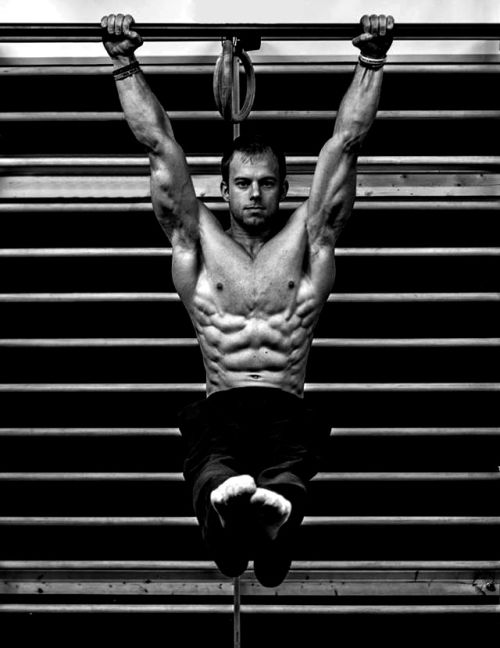
“Achieving the extraordinary is not a linear process.” – Christopher Sommer
This is another jam-packed episode with Coach Chris Sommer (GymnasticBodies on Instagram/Facebook), the former US national team gymnastics coach and founder of GymnasticBodies. As a world-renowned Olympic coach, Sommer is known for building his students into some of the strongest, most powerful athletes in the world. While this is a stand-alone episode, you can (and should!) check out his last appearance, which is one of the most popular episodes ever on the podcast.
We cover a lot in this episode, including:
- What home equipment should someone invest in first (for $100 or less)?
- What are Coach Sommer’s thoughts on weighted stretches?
- What does lower-body GST look like for a 40-year old former athlete?
- The best distinction between “mobility” and “flexibility.”
- Exercise progressions for bar muscle-ups and most common mistakes in training for muscle-ups.
- Foam rolling or mobility tools: Do they have a place in GST? If so, favorite uses?
- How should taller people (say, over six feet tall) adjust GST?
- How should women adjust GST?
- And much, much more.
If you only have 5 minutes, here’s the equipment Coach Sommer recommends if you want to get started with Gymnastic Strength Training.
Enjoy!
You can find the transcript of this episode here. Transcripts of all episodes can be found here.
- Listen to it on iTunes.
- Stream by clicking here.
- Download as an MP3 by right-clicking here and choosing “save as.”
Want to hear another podcast on fitness and training from a world-class coach? — Listen to my conversation with Pavel Tsatsouline. In this episode, we discuss the science of strength and the art of physical performance (stream below or right-click here to download):
This podcast is brought to you by 99Designs, the world’s largest marketplace of graphic designers. I have used them for years to create some amazing designs. When your business needs a logo, website design, business card, or anything you can imagine, check out 99Designs.
I used them to rapid prototype the cover for The 4-Hour Body, and I’ve also had them help with display advertising and illustrations. If you want a more personalized approach, I recommend their 1-on-1 service. You get original designs from designers around the world. The best part? You provide your feedback, and then you end up with a product that you’re happy with or your money back. Click this link and get a free $99 upgrade. Give it a test run.
This podcast is also brought to you by Wealthfront. Wealthfront is a massively disruptive (in a good way) set-it-and-forget-it investing service led by technologists from places like Apple. It has exploded in popularity in the last two years and now has more than $2.5B under management. Why? Because you can get services previously limited to the ultra-wealthy and only pay pennies on the dollar for them, and it’s all through smarter software instead of retail locations and bloated sales teams.
Check out wealthfront.com/tim, take their risk assessment quiz, which only takes 2-5 minutes, and they’ll show you — for free — exactly the portfolio they’d put you in. If you want to just take their advice and do it yourself, you can. Well worth a few minutes to explore: wealthfront.com/tim.
QUESTION(S) OF THE DAY: What was your favorite quote or lesson from this episode? Please let me know in the comments.
Scroll below for links and show notes…
Selected Links from the Episode
- Connect with Christopher Sommer:
GymnasticBodies.com | Instagram | YouTube | Coach Sommer at Facebook | GymnasticBodies at Facebook
- GymnasticBodies landing page for Tim Ferriss Show listeners
- The Secrets of Gymnastic Strength Training (Coach Sommer’s last appearance on this show.)
- Gymnastic Strength Training Illustrated – Tim Ferriss & Christopher Sommer (Modern Frontier’s video demonstrations of exercises discussed during Coach Sommer’s last appearance.)
- Learn How to Use Gymnastics Rings – Iron Cross, GymnasticBodies
- Making a Dream Machine by Michael Traynor at GymnasticBodies
- Sever’s Disease
- Hollow Body Position demonstration (with dowel) by Andreas Lund Hessner
- Arch Body Position demonstration (with dowel) by Andreas Lund Hessner
- Karate chopping filmed by high-speed camera
- Mats Trane at Instagram (who began Gymnastic Strength Training at age 48)
- Stretch Straps
- Yoga Blocks
- Straddle Lifts (Pulse) by RoutineFit
- Hurdler Stretch by PeakEnergyPerformancePT
- The Benefits of Weighted Mobility by GymnasticBodies
- The Legend of Tarzan trailer
- Jefferson Curls: Weighted Mobility for the Posterior Chain by GymnasticBodies
- Weighted Pike Stretch by GymnasticBodies
- How To Do Bar Muscle Ups by Barbell Shrugged
- Seinfeld – Newman!
- Obliques: The Missing Link in Your Core by GymnasticBodies
- Mobility for Desk Workers: Table Rocks by GymnasticBodies
- Are YOU Training Shoulder Extension? by GymnasticBodies
- Russian Dips: Build Strength for Muscle-Ups by GymnasticBodies
- Foam Rollers
- A Patient’s Guide to Adult Kyphosis by University of Maryland Medical Center
- The Hunchback of Notre Dame (Lon Chaney, 1923)
- CrossFit Training
- What is a Straddle Planche? by GymnasticBodies
- Learn How to Increase Your Flexibility – Lat Flys by GymnasticBodies
Show Notes
- Coach Sommer talks me through a speedier recovery for an injury I recently sustained. [07:50]
- Coach Sommer explains contrast baths (and how Michael Jordan used them to score 40 points on an injured ankle). [14:14]
- Home equipment for getting started with Gymnastic Strength Training. [16:21]
- The importance of overcoming damage from “desk patrol” and increasing mobility before getting into advanced exercises (e.g., dislocates, flexion work, shoulder extensions). [17:53]
- Explaining the hollow body position vs. the arch body position and how the dowel comes into play. [20:34]
- What a high-speed karate chop in slow motion demonstrates about the purpose of the skeletal system. [25:08]
- Inspiration from a 53-year-old for people who feel like they’re too old to get in shape. [27:53]
- How Coach Sommer changed his mind about the efficacy of stretch straps and yoga blocks. [29:45]
- The consequences of immobility. [32:46]
- What’s the benefit of elevating the heel of the straight leg on a block when doing a hurdler stretch? [34:38]
- Why are weighted stretches crucial for Gymnastic Strength Training (especially in adults)? [35:46]
- Other exercises Coach Sommer finds particularly effective. [39:17]
- Mobility vs. flexibility. [43:44]
- What does lower body Gymnastic Strength Training look like (and why do people who consider themselves fit usually get injured)? [44:35]
- Recommendations for preventing common running injuries. [50:26]
- Why connective tissue (like the Achilles tendon) thrives on high-rep work. [56:24]
- Coach Sommer tells us about going from gymnastics to elite running in high school to chase a girl. [59:26]
- What are the prerequisites for a safe back tuck? [1:00:27]
- What are the prerequisites for a bar muscle-up? [1:01:39]
- The main strength and mobility issues for inactive adults. [1:02:57]
- Building strength with Russian Dips. [1:04:58]
- Foam rolling — yea or nay? [1:07:32]
- Pursuing health and pursuing performance are not diametrically opposed concepts. [1:08:38]
- How can you avoid getting a Kyphotic hump (aka hunchback)? [1:09:47]
- Does Gymnastic Strength Training differ for taller people? [1:11:21]
- Does Gymnastic Strength Training differ between men and women? [1:12:24]
- What is the most effective way to handle gymnastics coaches when they get cocky and condescending? [1:14:28]
- How can you keep morale high as a beginner? [1:15:15]
- Is a sudden leap in progress after seemingly endless stagnation in training common? [1:19:24]
- Coach Sommer’s email about dealing with the temporary frustration of not making progress. [1:22:59]

Comment Rules: Remember what Fonzie was like? Cool. That's how we're gonna be — cool. Critical is fine, but if you're rude, we'll delete your stuff. Please do not put your URL in the comment text and please use your PERSONAL name or initials and not your business name, as the latter comes off like spam. Have fun and thanks for adding to the conversation! (Thanks to Brian Oberkirch for the inspiration.)
Hey Tim – you're probably already on top of this but on the nutritional side of things, bone broth should be useful for healing joints or connective tissue (ask the LA Lakers). I'm also a fan of Bulletproof Collagen Protein powder, which is pretty much taste- and odorless.
much more effective if this was a video podcast and see some demo position.
Hi Tim, I was going to suggest that you interview the Karolyi dynamic duo as a future podcast. I think their insights into how to turn capable people into brilliantly tough gymnasts would be a terrific episode. But like very much the current podcast on training. All the best, Anne
Foul language is offensive and unnecessary for educated people like yourself .. Your mother and FCC is correct in this case.. So please no GD and F words.. Otherwise a fantastic show .. Thank you..
I agree. I loved both podcasts with Coach Sommer. I'm in the foundation course now. Both of those podcasts should be edited to include video. It will make the content go from good to excellent.
What a phenomenal interview and discussion! I am a 49 year old male, six foot tall and 178 pounds; and have been working out, exercising and trying to eat clean for the past 6 years. I consider myself to be in great condition. I've done P90X, Insanity, Body Beast, 22 Min. Hard, and I train in Combat Submission Wrestling (BJJ with no Gi) Over the course of my training I lost of 36 pounds and have kept it off; built muscle and currently run about 12% body fat. My issue with the pull-up bar recently has been tendonitis in my hands. Using the pull-up bar combined with dumbbells wrist curls to work my forearms caused some serious tendonitis in my fingers. I had to stop on week 7 of my workout routine and focus on healing. It's generated questions and concerns for me about tendon and ligament care and flexibility. How does a recovery period figure into workouts? How to combine a health long term workout plans, nutrition with periods of rest and recovery? My joints are great shape and fortunate to have great knees and a healthy back. The discussion on connective tissue, mobility and flexibility is very intriguing to me considering my tendonitis issues. I stretch daily but my progress appears to have halted and I can't do a full split no matter how hard I try. I have some hip tightness that I just can't seem to over come. Great discussion!! Awesome and keep it up!!
could you please copy and paste coach sommers email as a facebook post – would love a transcription of that!
I broke my shoulder blade last summer along with separating my shoulder also. The break has long since healed but the pain from the CA joint persists. I was wondering if anyone had any tips for dealing with this and possibly thriving without surgery.
I actually wish this type of conversation with Coach Sommer would turn into a regular (monthly?) podcast. I know Tim diversifies the content and tries to make sure about 1/10th of his audience loves it, but I feel like his convos with Coach could be stand alone. There could also be more time spent unpacking a single subject rather than trying to fit so many things into 1hr 30mins. Maybe Coach Sommer just needs to start his own podcast! I feel like there's demand, and it would be a great addition to some of the excellent visual content on the GB social media pages. Coach should try a 6 episode test and see how he likes it. I could see it also generating a ton of high quality traffic to gymnastic bodies. Just my two cents!
Hey Guys, I really appreciated the part of the email that Tim read from Coach Sommers at 1:22:59, and I wanted to send it to a family member so I transcribed it as best I could. Here is a copy for anybody who wants it. Dealing with the temporary frustration of not making progress is an integral part of the path to excellence in fact it is essential and a thing that every single elite athlete has had to learn to deal with. If the pursuit of excellence was easy then everyone would do it in fact this impatience in dealing with frustration is the primary reason that most people fail to achieve their goals. Unreasonable expectations time wise resulting in unnecessary frustration leading to a perceived feeling of failure. Achieving the extra ordinary is not a linear process the secret is to show up do the work and go home. A blue collar work ethic married to an indomitable will, it is literally that simple. Nothing interferes nothing can sway you form your purpose, once the decision is made simply refuse to budge, refuse to compromise. – Coach Christopher Sommer The Tim Ferris show
Favorite Lesson: Healing connective tissues takes time – 6 to 8 months. Be patient. Keep practicing. You will have a break through. Wait for it. It took a long time to get messed up, it will take a while to get fix it. Favorite suggestion: Discussion on healing and use of heat. I wonder if a heating pad would be as effective as a hot pad? Question for Tim: How is the wrist healing? Please share your progress and how rehab has worked and how did you train "thru" — I know you did to some extent. I'm dealing with a very painful elbow/tricep from too much dip and pull up work, probably due to lack of wrist/grip strength and poor shoulder extension. Just ordered the ArmAid. Spoke with Terry, the inventor. He was honored to have received a mention from you on the show. Would like to connect and offer your listeners a discount on product. Asked if I would facilitate. Please contact me if you are interested. Thanks for bringing such great info to the masses!
Super Excited! Been waiting for this one. Thanks Tim, you're the man.
Afternoon, I've been looking at the foundations course, what equipment (minimum) would be necessary for this course? Thanks!
Tim, what is the purpose of rolling your on a golf ball?
Coach Sommer talks about what lower body gymnastics strength training looks like. Is it a part of any program? Currently I squat and deadlift every week. I'd love to incorporate some of the lower body training Tim was talking about in the podcast (in the calf raise segment)
This podcast would have been more interesting if you had compared your workout, i.e. HIT (high intensity training) method also known as Slow Burn or Super Slow or Power of 10 with this method. And since you are a scientist provide the results of each for strength and endurance improvement which is what we all want.
coach sommer — you note it will take 6-8 months to rebuild connective tissue. during that time, do you recommend someone cease all other workout activities? for example, i currently deadlift 1x per week (3-5 sets of heavy weight, low reps), squat 1x per week (3-5 sets of heavy weight, low reps), and regularly do pull-ups and push-ups. i very much fit the mold of a male desk jockey / "broken" athlete in his late 30s (calves as tight as piano wires, lack of mobility especially in the shoulders). i am committed to fixing this and wanted to be clear on next steps. should i immediately stop all current strength training and just focus on gst 100%? or can i continue to deadlift / squat 1x each per week while at the same time incorporating gst into my program? what about the body weight exercises of push / pull-ups? what's your recommendation assuming there are definite deficiencies that i need to address? thank you! p.s. in terms of my exposure to gst, i just purchased the fundamentals course. i am also keen for any suggestions you have on where i should start. i am unfortunately not close to one of the gst affiliates.
Just one note, fascial adhesions are not the deformation of muscle tissue to collagen. Rather it is binding of already present fascial connections that slowly become reinforced due to posture, training, load, etc… Sometimes this plastic deformation is positive and sometimes it is negative.
Do some of you remember the home equipment for getting started with Gymnastic Strength Training?
"Dealing with the temporary frustrations of not making progress is an integral part of the path towards excellence. In fact, it is essential and something that every single elite athlete has had to learn to deal with. If the pursuit of excellence was easy everyone would do it. In fact, this impatience in dealing with frustrations is the primary reason that most people fail to achieve their goals. Unreasonable expectations time wise resulting in unnecessary frustrations due to perceived feeling of failure. Achieving the extraordinary is not a linear process. The secret is to show up, do the work, go home. a blue collar work ethic married to an indomitable will. It is literally that simple. Nothing interferes, nothing can sway you from your purpose. Once the decision is made simply refuse to budge, refuse to compromise." I went into this podcast expecting very little. But the moment I finished listening, I immediately listened to it a second time, listening to every single word. What Coach Summers said about mature and immature attitude towards training and being patient with the process really hits home and it can be applied to every other aspects of life as well, and for that I thank you both. Great Episode! (…also coach summer's email excerpt is going up on my quote wall at work).
Hi Tim, I am currently reading the fourhourworkweek and I am someone who's a little behind in terms of technology. Where do you think would be a good place to start catching up?
Do these exercises and stretches work/help for someone who is hypermobile in muscles and joints. Is this kind of gymnastics training a viable option to strengthen the tissues and joints around already loose and flexible joints not necessarily tight ones. Love to hear your thoughts Coach Sommer and Tim. Thanks again for an awesome round 2!!
What suggestions do you have for seniors? They probably need help more than anyone.
Hi, Tim! Hi, Coach Sommer! I'm curious how a hot water bottle works in relation to the healing with heat. I know they come in various sizes, and they retain the heat much longer than a 2 minute soaked hot/cold pack you mentioned in the podcast. However I'm not sure if the purpose of the hot/cold pack is that it allows the body to return back to normal temperature quicker than the bottle and that you get several "reps" done over a day, making it similiar to the contrast therapy as opposed to the long bake you'd get with the hot water bottle.
Twisting squats are insane! As a person with long femurs I find them close to impossible despite being able to do a one or two pistols. I started doing them regularly with a yoga block and plan to gradually reduce the “seat” height as I get better.
One thing I'm unsure of.. I love lifting. And I still have a lot of strength to build. But I understand and can feel my own tightness and lack of mobility. It what ways can I incorporate some of these routines and still lift? Or are they mutually exclusive?
Thank you for including links to videos of how to do some of the exercises in this post Tim!
Hey, Tim! Not expecting, or asking for, a response to this. Just throwing in a notice: If we are ever lucky enough to have Christopher Sommer back a third time on the podcast, then could you perhaps talk more about wrists? It has not be mentioned much in the ~4 hrs of material currently available, nor the GB strength training. Methods for gradually increasing mobility? Consequenses of not doing so? When do you need mobility in the wrists? How and why to train for stronger wrists? I'm dying to hear more about this! P.S. Big fan. Love what you do. I consume everything from in-between-isodes, training, ketosis, investment, business, artists and creatives. Keep it up!
What does Coach Sommer think of using inversion tables to deal with neck and back pain and stiffness? Any preference for "bent knee" inversion table such as this one (http://www.inversionusa.com/dexiihomeinversion.html_) or a "hang up" inversion table such as this one? Thanks! John R.
Absolutely loving thess pobcasts, finally an approach that makes sense and works with the body rather than against it!! Just bought fundamentals and am blown away by how simple it is but how good it makes you feel! Thank you thank you thank you!
Coach Sommer, I love your sense of humor. I have a better understanding of joints and mobility deficits. Thank you very much for all the wisdom.
Hi Coach I have started working with your accredited trainers in OZ and am loving the program. Have made significant shifts over the last month or so with fundamentals and handstands. As a 63-year-old I feel much younger and more mobile. I want to study your foundation course online in addition to working with my trainers but am not sure where to start with that or the stretching program. can you please advise me thanks Shankardev
Lots of good information. Thank you both for sharing. I declared a war on my pinched nerve. I started running, lifting etc, building up my strength again. *insert Rocky 4 training montage music here* Genetically I am very lucky. My body collects itself so fast, I am amazed. Thank you Zeus. 😛 I listened what Coach Sommer had to say about sport injuries. Here is another idea: at that particular time, I was not paying attention to my diet properly. I went to the gym late. By the time I got back home it was 10pm-11pm. I had shower, drank a lot of water and went to bed. I didn't want to eat that late and I didn't, even though I knew my muscles needed nutrition after 50 minute exercise. I did this about 4 times a week for a while. What I am saying is lack of muscle nutrition might have contributed to pinching my nerve. My gears ran out of juice and broke. And, there were periods of times in the past I got carried away with training but I never had any problem because I looked after myself properly (nutrition vice). On that note, Tim Ferriss please keep sharing your new sports nutrition finds on social media. Thank you again. Best x
Fantastic podcast once again. The first interview introduced me to GB and this was perfect motivation during a time of frustration. Would you be able to share the email that he replied back to you with? His response was something I'd like to post on my wall. Thanks!
Hi Tim, and Coach Sommer!, Thanks for another great podcast! Any exercises to build up to pull ups that do not put pressure on the neck? I've got some moderate stenosis, mild spurs, and mild bulging discs in the C5-C6, and C6-C7 (years of boxing, kickboxing, MMA, and being 58…). If I just hang a bar for 20-30 seconds, the next day my neck is in quite a bit of pain. (Working in it with a chiropractor etc.) I suspect many of us are dealing with neck issues for a lot reasons, so working on selected muscles for the pull up, while healing the neck would be a big help. Thanks! John R.
Coach Sommer, thank you (and Tim) for another awesome discussion. Could you please elaborate on the concept of connective tissue? Prior to listening to both podcast interviews, I was under the impression that connective tissue could not be built nor regenerated, as my understanding is that connective tissue implies tendons and ligaments. Also, I'm training for Navy SEAL selection at the moment. I have a little over a year until BUD/S. After listening to this interview, I want to focus mostly on addressing mobility deficits (while swimming and running) and back away slightly from intensity, Crossfit strength training. With any time remaining after addressing mobility issues, I intend to strengthen connective tissue, as I'm equating this to a net decrease in the probability of successfully getting through BUD/S with minimal injuries. From your experience, is there anything else you'd recommend I research or try for my specific training for Navy SEALs? Thank you!
Thanks to both Tim and Chris Sommer for these two episodes. Still working through them since so much to digest! Sommer's fellow pioneers like Jim Radcliffe at Oregon have used the wall ladders and these ideas for awhile for football, but the rest of us are trapped in NSCA cookie-cutter weight rooms pushing everything up, up up. Maybe in the next decade the football S&C world can catch up. I'm still groping in the dark mostly, trying to prove that speed and functional mobility can be taught. I'll keep drinking the Sommer/Tsatsouline/Chek koolaide until I get found out and fired or we break through!
How compatible is this Gymnastic Bodies program with a 5×5 barbell strength training regimen like StrongLifts.com or Starting Strength? I'd like to explore it, but I'm afraid that by focusing on mobility and bodyweight exercises, I will be neglecting my strength training and muscle building regimen.
In the show notes-links there's a video of how to do a bar-muscle-up. witch you talked about of cause. BUT the video is of a KIPPING bar-muscle-up, and unless my ears are screwed on wrong neither of you sounded like you where a great fan of those….
Hey Coach, So, I'm wondering if you have a more detailed list of which muscle groups are endurance based vs those that are inherently more power based. You mentioned that groups like Calves, Biceps and Core have all evolved as endurance groups and the most effective programs speak to that fact. Any more info (or infographics!) would be great. Thanks in advance!
Sous Vide and tennis elbow, I really enjoyed the podcast. The tip I found most interesting was using heat for tendons. I typically, have been icing my tennis elbow. After listening to the podcast, I thought that a sous vide heat bath might be effective since the coefficient of heat exchange is high with water than any other substance. I experimented and found 115 F for 15 minutes to be a good starting point for me. I also get relief from Gua sha. [Moderator: Product link removed]
I apologize if this is already in the comments, but I'm looking for the series the ultra runner in Montana is doing (mentioned in the podcast). I implement some mobility and stretching into my weekly routine but I would like to build a better routine. I was looking for the stretch series, but I didn't see anything on the website. Thanks!
One question for Coahc Sommer/Tim – when you talk about the difference between a muscle vs. connective tissue adaptive cycle (90 days vs 220 days or something like that?) what does that actually mean? Obviously muscle can build and grow fast than that, so what is the difference? Thanks!
Hi Tim. Really enjoyed this week's podcast with Coach Sommer – sorry to hear about your wrist injury. Our family runs a unique thermal heat pack business, known as "Hotties", which releases a safe and gentle heat for up to 4 hrs. We'd love to send you samples (and a pet version for Molly!). [Moderator: link removed]
Hi Tim/Coach Sommer, Another great episode – thank you! Wondering if you could explain how to best go about applying the contrast bath technique to a knee injury. Any guidance you can provide on that is appreciated as it seems an actual 'bath' would be a bit difficult for that body part. Thank you! Sam
I think an interview with Ido Portal would be great, have you thought of interviewing him?
Very helpful episode. Coach, would you recommend heat instead of ice for a nagging case of plantar fasciitis, similar to the wrist injury? I've been trying stretching, ice, and not running without much progress over the past 10 months. Podiatrist of course wanted to try cortisone shots and orthotics, which didn't do much. PTs haven't shown much progress either. Any recommendations from your experience would be very appreciated. Thank you.
Dear Tim and team: your dissection of athletes has given me and the community great insights, and made me a better person all around. I have a suggestion for you for a podcast guest: Chris Horner, the pro cyclist (still at age 46), Vuelta champion, and mentor to a generation of cyclists. Chris is a fascinating person, and he is the caliber of person deserving of the Tim Ferriss show. My conversations with him have been as inspiring as your podcasts. You find him at @hornerakg. Thomas Hofmann MD
Like Part 1 I created a mashup of excerpts of the interview talking about specific movements with visuals of those movements. Hope you find it helpful! https://www.youtube.com/watch?v=ha911FRiiFU
Coach Sommer, Thanks so much! I'm working the fundamentals course. Are there any trainers or plans to open a facility on west side of LA? I'd love to go. Jamie
Gymnastics and body weight suspension training (training like a gymnast with your feet on the ground) should have been obvious to all of us however it wasn't until the (feet on the ground) concept made the functional part achievable for the masses. Working with a percentage of ones body weight and performing pushing and pulling movements with our bodies in space not only improves strength but improves functional strength as we improve the skill level on how our bodies move. "Cross-functional" should be the new movement campaign trainers use with clients, and yes even isolated balanced selectorized machine movements should be part of the progression in developing movements to improve a clients physical readiness and skill level for ground based functional movements. Take it from an old gymnast who still loves "training like a gymnast with my feet on the ground" minus the dismount!
Tim, I may be alone in this comment but here it is anyway. I became aware of your podcast through Gymnasticbodies.com. I am very interested in the information that can be had from your conversations with Coach Sommer. I couldn't listen to either podcast (part 1 or 2) because I find the swearing offensive. I don't find that it adds in anyway to the information being shared but that it detracts from it. I would love to hear a version of this podcasts without all the profanity. Otherwise I can't listen to it.
Coach Sommer – In both of your podcasts with Tim, you mentioned the turn over time of collagen as up to 6 months. Could you provide a citation or link for this? This is something I'm interested in,but haven't found a good resource yet. Thanks.
Hello Mr Ferriss, I'll keep it brief as I'm sure you get many questions a day. I've ready the 4-hour body and have reaped the rewards of smarter training. Thank you! My question is this; Is there a way the reconcile the Occam's protocol (mass program) and GST (my most recent addiction)? My goals would be increased mobility, strength AND size. My work requires a more sculpted physic which Occam's protocol helped with immensely however I am enjoying the new found range of motion and strength of GST. The only problem being GST seems to make me a bit soft, not as lean and smaller in certain areas. I do understand that Occam's protocol is based on the basic principals of hypertrophy and GST on a completely different physical system however can they be combined into a hybrid? Your input would be greatly appreciated. Keep up the good work and as always, I'll be listening. Regards,
Doing something properly, from the start, is the best way.
what is so good about bulletproof collagen than other hydrolized collagen ?
https://www.gymnasticbodies.com/podcasts-2/ – not exactly the droids you're looking for but close
Tim — I want to hear about hot women in one of your studies. Hot in this case meaning women having hot flashes. We know that in some cultures women do not suffer. Do you have any sources that may be able to expound on any latest thought or technology?
*rolling your foot on a golf ball
If you don't like the language, don't listen to the podcast. I prefer that they feel comfortable speaking freely rather having edited, buttoned up conversations.
If you're referring to the '/tim' foundations course, I've almost completed it and none of the exercises so far required equipment. I doubt that they would require any for the remaining lessons, as the idea seems to be that anyone can do this in their living room. There's also extra guidance for folks that have mobility issues for certain exercises and need to make adjustments.
LOTS of video provided in the links above.
Hi Carlton, You are of course entitled to your opinion. As I am entitled to mine. That being said, proper language is something that I continue to work on but years of military service and decades as a national team coach tend to work against me. Regardless, I will continue to call them as I see them.
Hi M. Ray, Congratulations on your sustained success with your physical conditioning. For your pullup work: 1) try switching from a bar to rings 2) adding a 'fat gripz' to your rings should greatly reduce the stress on your fingers while simultaneously greatly increasing your forearm stimulation from pullup work. 3) reduce the volume of your pullup work until you are pain free. Then reduce a little bit more. And from that point gradually begin rebuilding.
Hi ssmith823, Glad you are enjoying the podcast(s). As a matter of fact there is a regular GB Podcast currently in development. B|
Hi Michael, My leg strength and mobility progressions are found in the GB Foundation courses. In addition the calf raise segment you are looking for is found in the GB middle split series.
Not at all. There is no need to cease your other training. What I am recommending is that you put your other training on 'maintainence', while you focus first on addressing existing mobility deficits.
Hi Wiley, For that very reason I would not recommend using a hot water bottle. Too much heat for too long a period of time. The hot/cold packs will generally cool down to nearly room temperature in 10-15 minutes.
By no means are they mutually exclusive. Nor is it necessary to stop lifting. To make progress however, it is necessary to place your lifting on maintainence and make correcting your mobility deficits your main priority. Once they are corrected, then your mobility work goes to maintainence mode and you may resume progressing your lifting.
Simon, The gymnastics bodies course on handstands goes through this progression thoroughly. It's a slow but steady process with progressive mobility and strengthening exercises. It is AWESOME. In only about 2 months my flexibility and strength has improved immensely. Highly recommend this course.
Hi Corey, Here is an excerpt from one of my GB forum responses regarding this very question: "… First thing to understand is that BUD/S is a physical and emotional endurance event in which strength takes a far distant second place. Note that BUD/S is NOT training. It is selection. You either have what they are looking for already or you don't. If this was Special Forces or Delta, the focus would be on rucking, however in BUD/S the focus is on running. You are going to be running a minimum of 7-10 miles per day. Minimum. Usually in an already pre-exhausted state. And bruised. And abused. And generally pissed off …" The rest of the post may be read in full here: https://www.gymnasticbodies.com/forum/topic/23302-gymnastic-bodies-for-special-forces-prep/?#comment-204967
Hi pjharght, Here are the three GB stretch courses that the ultra runner is using: https://www.gymnasticbodies.com/gb-courses/stretch-series/
Hi Sam, I think you are out of luck with contrast bath on the knee unless you have access to both a cold plunge and a lukewarm hot tub in which case it would turn into a whole body contrast bath. Due to the inconvenience of switching from tub to tub, I would probably experiment with a different duration of 2-3 minutes in each tub and see how the body responded.
What, in particular, is it about the swearing that bothers you?
There are probably other great products out there, but the Bulletproof brand is one I trust. What I like about their products in general is how they seem to go to great lengths to ensure maximum potency and minimal toxins or unwanted side effects that would occur without the proper sourcing and processing of ingredients. This is even true for their coffee beans, for which they use specific harvesting and drying methods. As for their collagen, the cows spend their entire lives in the pasture and are drug/hormone-free. The collagen is processed a certain way to keep the peptides intact etc. Expensive? Perhaps, but worth it in my opinion. By the way, I'm just a fan, not getting paid to say all this 🙂
well he got to you. you are a fan so your decision is mostly emotional so much so that you are willing to pay the price. not saying that his product is not quality BUT way over price because of of his "market branding". same quality can be achieved at a better price point. nowadays just to combat the toxic environment we lived on the supplements we take adds up. so find a better priced product with the same quality so you can stack other supplements the complement each other. just saying but it is entirely your choice.
You are absolutely right about the emotional factor in my decision making. I apply this same rationale not only to Dave Asprey’s brand, but also Mark Sisson’s products or Tim Ferriss’ recommendations, the reason being that they gained my trust over time and are constantly over delivering in terms of value. Not saying I blindly do or buy whatever they tell me to, however chances are they already sifted through a ton of data and did a lot of testing (incl. on themselves). This not only saves me a ton of time but I have a level of reassurance that is not as easy to get when I know nothing about a company or its true motives.
I can't speak for Tim, but I tore my plantar fascia tendon and needed to do it in PT. I have really high arches and played basketball for years. It's is essentially myofascial release, its like foam rolling but for your foot.
@ChrisW I think you meant Fundamentals, which requires no equipment. The Foundations One course is much more involved and does require some equipment or access to equipment. I finished Fundamentals, and have been reluctant to spend funds on Foundations as Fundamentals seemed to lack a plan that I could regularly adapt. Uncertain if Foundations would be similar. I keep working Fundamentals as it improves mobility needed for Foundations.
Rolling the foot on a golf ball/tennis ball helps to release muscles in the sole of the fooot which may be chronically contracted as well as starting the process of breaking up pre-existing adhesions and knots that may be present.
Coach Sommer, I am in the same boat, a heavy weight lifter with bad mobility. Which GB course(s) would be needed to fix this while putting weight lifting in maintenance mode? Is Fundamentals the correct one to fix the problems? Or is Foundation 1 also needed to fully fix them?
Coach Sommer, This is great to know. I've been working with Associate Aric Lee in Arlington Virginia and am super excited about progress already. I am fully dedicated to the program and the mindful steady training therein. I've purchased Foundations, Fundamentals, and Handstand and am working towards those as well. Hope to some day in the future attend a seminar and work with Aric as he opens his own gym 🙂 Jason, speaking from personal experience and recommendation I would say it depends on how bad your lack of mobility is and what imbalances you've developed due to bad habits or past injuries. Mine were personally so bad after a couple surgeries and years of bad posture that I had "shut off" the left side of my body and certain other muscles. I was compensating so bad with my dominant muscles that I had to immediately stop all lifting until my mobility and neuro-muscular connections improved. I COULD NOT get my left "core" to engage or my right abductors and VMO. I had to be doing body-weight only or else my body would compensate by using the wrong muscles for just about every exercise. I can list the specifics if you're curious, but mobility training (which even as a college soccer player I had NEVER DONE) was key in correcting the issues at hand. Listen to your body and train extremely mindfully. I tried to force it for the past 2 years and it just made it worse. Take a step back, reset, and trust in the system to build you back up from scratch if need be.
I had my wife & 6 yo grandson in the car while listening….not good. Plz warn ahead of time….however as Patton said: a soldier who can't swear can't fight his way out of a pissed soaked paper bag. There was much my wife missed that is applicable to her as a former world class swimmer.
Hi Jeff, Thought I would share a personal experience regarding this with you. A few years ago someone in my family discovered that supplementing with iodine completely stopped her hot flashes. Interestingly the hot flashes stopped immediately upon starting the iodine. Very unexpected. Iodine supplementation as the solution was confirmed by the hot flashes return for a day when she missed her iodine one day early in the treatment protocol. There was a return of the hot flashes on a second day when she ran out of iodine one morning further into the treatment. The hot flashes were uncomfortable enough that after these two occasions of missed supplementation she was quite diligent in taking her iodine on schedule. She took the iodine supplementation for approximately 12 months after which the hot flashes were no longer an issue. The supplement she took was one tablet each morning of Iodizyme-HP fm Biotics.
I am in a similar situation as Bruce. Though even when I am alone and don't want to hear the foul language. I would love to hear this podcast but not at the cost of hearing the degrading language.
Language that is vulgar, crude or demeaning does not uplift me or help me in becoming better. Thoughts repeatedly entertained find their way into its physical equivalent. So in my case for me to be the best I want to be I need to rigorously exclude all things that would destroy my straight line of effort. It is a small price to pay for the return. I am very careful of what I watch or listen to because I know the effect that it can have on me and the goals that I have. I can't speak for anyone else but for me I avoid these things.
I agree. Strong language can be useful for _occasional_ emphasis, but it can be overdone.