



Post reading time: 15 minutes.
Language learning need not be complicated.
Principles of cognitive neuroscience and time management can be applied to attain conversational fluency (here defined as 95%+ comprehension and 100% expressive abilities) in 1-3 months. Some background on my language obsession, from an earlier post on learning outside of classes:
From the academic environments of Princeton University (Chinese, Japanese, Korean, Italian) and the Middlebury Language Schools (Japanese), to the disappointing results observed as a curriculum designer at Berlitz International (Japanese, English), I have sought for more than 10 years to answer a simple question: why do most language classes simply not work?
The ideal system — and progression — is based on three elements in this order…
1. Effectiveness (Priority)
2. Adherence (Interest)
3. Efficiency (Process)
Effectiveness, adherence, and efficiency refer to the “what”, “why”, and “how” of learning a target language, respectively. In simple terms, you first decide what to learn, based on usage frequency (priority); you then filter materials based on your likelihood of continued study and review, or adherence (interest); lastly, you determine how to learn the material most efficiently (process).
Let’s cover each in turn. This post will focus on vocabulary and subject matter. For learning grammar, I suggest you read this short article. For “reactivating” forgotten languages — like high school Spanish — this sequence will do the trick.
Effectiveness: If you select the wrong material, it does not matter how you study or if you study – practical fluency is impossible without the proper tools (material). Teachers are subordinate to materials, just as cooks are subordinate to recipes.
Adherence: Review, and multiple exposures to the same material, will always present an element of monotony, which must be countered by an interest in the material. Even if you select the most effective material and efficient method, if you don’t adhere with repeated study, effectiveness and efficiency mean nothing. In other words: can you persist with the material and method you’ve chosen? If not, less effective materials or methods will still be better. The best approach means nothing if you don’t use it.
By analogy, if sprinting uphill with bowling balls in each hand were the most effective way to lose body fat, how long would the average person adhere to such a program?
If you have no interest in politics, will you adhere to a language course that focuses on this material? Ask yourself: Can I study this material every day and adhere until I reach my fluency goals? If you have any doubt, change your selection. Oftentimes, it is best to select content that matches your interests in your native language. Do not read about something that you would not read about in English, if English is your native language (e.g. don’t read Asahi Shimbun if you don’t read newspapers in English). Use the target language as a vehicle for learning more about a subject, skill, or cultural area of interest.
Do not use material incongruent with your interests as a vehicle for learning a language – it will not work.
Efficiency: It matters little if you have the best material and adherence if time-to-fluency is 20 years. The ROI won’t compel you. Ask yourself: Will this method allow me to reach accurate recognition and recall with the fewest number of exposures, within the shortest period of time? If the answer is no, your method must be refined or replaced.
An Example of Effectiveness (80/20) in Practice
Pareto’s Principle of 80/20 dictates that 80% of the results in any endeavor come from 20% of the input, material, or effort.
We can adapt this principle and prioritize material based on its recorded likelihood and frequency of usage. To understand 95% of a language and become conversational fluent may require 3 months of applied learning; to reach the 98% threshold could require 10 years. There is a point of diminishing returns where, for most people, it makes more sense to acquire more languages (or other skills) vs. add a 1% improvement per 5 years.
To see exactly how I deconstruct the grammar of new languages, I suggest you read “How to Learn (But Not Master) Any Language in 1 Hour”. Now, on to the meat and potatoes of communication: words.
If you were a student of English (though the list can be adapted to most languages), the following words would deliver the greatest ROI per hour invested for the initial 1-3 weeks of study:
The 100 Most Common Written Words in English
- the
- of
- and
- a
- to
- in
- is
- you
- that
- it
- he
- was
- for
- on
- are
- as
- with
- his
- they
- I
- at
- be
- this
- have
- from
- or
- one
- had
- by
- word
- but
- not
- what
- all
- were
- we
- when
- your
- can
- said
- there
- use
- an
- each
- which
- she
- do
- how
- their
- if
- will
- up
- other
- about
- out
- many
- then
- them
- these
- so
- some
- her
- would
- make
- like
- him
- into
- time
- has
- look
- two
- more
- write
- go
- see
- number
- no
- way
- could
- people
- my
- than
- first
- water
- been
- call
- who
- oil
- its
- now
- find
- long
- down
- day
- did
- get
- come
- made
- may
- part
The first 25 of the above words make up about 1/3 of all printed material in English. The first 100 comprise 1/2 of all written material, and the first 300 make up about 65% percent of all written material in English. Articles and tense conjugations that can often be omitted in some languages or learned for recognition (understanding) but not recall (production).
Most frequency lists are erroneously presented as the “most common words” in English, with no distinction made between written and spoken vocabulary. The 100 most common words as used in speech are considerably different, and this distinction applies to any target language.
The 100 Most Common Spoken Words in English
- a, an
- after
- again
- all
- almost
- also
- always
- and
- because
- before
- big
- but
- (I) can
- (I) come
- either/or
- (I) find
- first
- for
- friend
- from
- (I) go
- good
- goodbye
- happy
- (I) have
- he
- hello
- here
- how
- I
- (I) am
- if
- in
- (I) know
- last
- (I) like
- little
- (I) love
- (I) make
- many
- one
- more
- most
- much
- my
- new
- no
- not
- now
- of
- often
- on
- one
- only
- or
- other
- our
- out
- over
- people
- place
- please
- same
- (I) see
- she
- so
- some
- sometimes
- still
- such
- (I) tell
- thank you
- that
- the
- their
- them
- then
- there is
- they
- thing
- (I) think
- this
- time
- to
- under
- up
- us
- (I) use
- very
- we
- what
- when
- where
- which
- who
- why
- with
- yes
- you
- your
Individual word frequency will vary between languages (especially pronouns, articles, and possessives), but differences are generally related to frequency rank, rather than complete omission or replacement with a different term. The above two lists are surprisingly applicable to most popular languages.
Content and vocabulary selection beyond the most common 300-500 words should be dictated by subject matter interest. The most pertinent questions will be “What will you spend your time doing with this language?”
If necessary, the most closely related rephrasing would be “What do I currently spend my time doing?” It bears repeating: do not read about something that you would not read about in your native language. Use the target language as a vehicle for learning more about a subject, skill, or cultural area of interest. Poor material never produces good language.
Feed your language ability foods you like, or you will quit your “diet” and cease study long before you achieve any measurable level of proficiency.
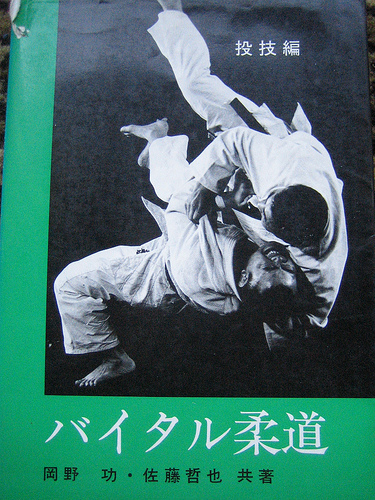
As a personal example, I used martial arts instructional manuals to compete effectively in judo while a student in Japan. My primary goal was to learn throws and apply them in tournaments. To avoid pain and embarrassment, I had tremendous motivation to learn the captions of the step-by-step diagrams in each instructional manual. Language development was a far secondary priority.
One might assume the crossover of material to other subjects would be minimal, but the grammar is, in fact, identical. The vocabulary may be highly specialized, but I eclipsed the grammatical ability of 4 and 5-year students of Japanese within 2 months of studying and applying sports-specific instruction manuals.
The specialization of my vocabulary didn’t present a single problem in communication, it is important to note, as I was spending 80% of my free time training with people who also used judo-speak and other vocabulary unique to sports training and athletic development.
Once the framework of grammar has been transferred to long-term memory, acquiring vocabulary is a simple process of proper spaced repetition, which will be the subject of a dedicated future post.
In the meantime, don’t let languages scare you off. It’s a checklist and a process of finding material you enjoy with a good frequency ROI.
Ganbare!
###
Odds and Ends: Giveaway and USC Video
I’ll be giving away some very cool stuff this week on Twitter (electronics, my favorite bags, etc.). Just click here and follow me to see the goodies.
The Cisco-sponsored video about my house by the USC team is in the final 24 hours of competition and needs a few more views to win. Unfortunately, none of the embed views counted last time due to bad code. Please click here and wait a few seconds to help these kids get their big break!
Comment Rules: Remember what Fonzie was like? Cool. That's how we're gonna be — cool. Critical is fine, but if you're rude, we'll delete your stuff. Please do not put your URL in the comment text and please use your PERSONAL name or initials and not your business name, as the latter comes off like spam. Have fun and thanks for adding to the conversation! (Thanks to Brian Oberkirch for the inspiration.)
Tim, thank you for inspiring me to learn Chinese. I was thinking, if you can do it in three month I will get there somehow. I am in my second year. I still suck but I enjoy it and your tricks helped me a lot.
My 2c: I'm not interested in learning to read any languages, just speak. What I do is this: ignore grammar completely in the beginning and attempt to learn a pidgin so I can *communicate*. I figure babies learn the most common words and then figure out the grammar afterwards from context. So do I. Initially I learned about 5,000 words or so of written words in Spanish in Supermemo then I started reading grammar books and watching telenovelas in Spanish. It took about a year and I have university level (or better!) fluency in Spanish complete with grammar etc. Right now I have to work with three main languages at the airport (german, dutch and italian). So far I only have limited Italian and very very little Dutch and German. But here's the rub: my Italian is seriously pidgin but I can communicate in a baby like way well enough. I reckon I need only a few hundred words and I can kludge my Spanish and Italian together for maximum effect even if the grammar is crap. The same method I used to learn Spanish I will apply to learn Dutch. This time, however, I'll be using spoken words rather than written words in Anki and I expect I'll accumulate them much, much faster because the brain is geared to learn spoken language faster than written.
Wiktionary has lists of the most commonly used words for over 30 languages. See 'Wiktionary:Frequency_lists' at http://en.wiktionary.org/wiki/Wiktionary:Frequency_lists
@traveler, I reckon many people give up because they set the bar too high. I'm cheating a little by being satisfied when I can speak and have minimal functional conversations in a pidgin. I suspect that many people give up because their bar is fully functional conversation in a range of subjects. That probably requires being immersed for at least some months AND doing all the rote memorization stuff or else spending at least an hour or a couple hours every day watching TV in the target language which is really sore on the head because you can't get any feedback from the speakers.
Hey, Tim: I just heard you via the Long Now Foundation Web stream. I'm most interested in your practical applications of learning how to learn. The more you speak and write about those the better. Thanks. Nice presentation.
Tim, I saw you speak about this in SF just a few days ago. I live in a house with many people and everyone speaks at least 2 languages if not more. It has been a personal embarrassment that I do not. I've always wanted to learn French and am scared out of my mind to do it, but I promise to put at least a few weeks in to see if I can get up the courage to continue. I do have a question. The majority of my time is spent working on my company and do not read for leisure much or anything else for that matter (just emails, facebook, and some blogs). The majority of my consumption is through videos. How can I apply this to watching a movie or watching a video on my customer base?
I like your post, and the idea that one can learn languages outside of traditional methods, but, having been an expat in 4 different countries for over 10 years, I have to say that people here seem to be a bit overly optimistic about how quickly they can learn a language. Not trying to be argumentative, but, let's face it, learning a language is hard work, and it does take time. …longer than 3 months!
My approach to learning Spanish was very similar to the one that Tim describes. I needed a good dictionary that would allow me to work efficiently without switching between languages and without the need to type the whole word. Knowing word frequency was essential. Ability to save searches and having a history of searches was important. Being unable to find a dictionary that would satisfy that criteria, I wrote one. It’s located at www.meomero.com I also built the number of other tools that would simplify language learning. If you are interested, just email me at esadov AT yahoo Later.
I am wondering what is the best program to buy to learn a foreign language.
Great post Tim, I'm learning Spanish (and how to live in Spain!). I wish I had given this some thought a few years ago! Speeding up learning is the best advice I can give anyone, focus on the language for a few months, learn it and go out and enjoy! BTW shouldn't your English list have 'It' on… it! It is a pretty common word! Hasta luego James
Very helpful, learning a language can be very easy depending on the commitment of the person. I have found a very good website, where you can learn online with native speakers or meet up with them during events or even live together in flat or room shares inorder to learn languages. foreigntalk.com The website i have found to be really good and by far the most userfriendly.
Why don't you address the difference in plasticity (the ability to learn new information and absorb experiences) between the per-pubescent brain vs. the adult brain. It is a well documented fact that children are better able to learn languages than adults because of their exposure to phonemes and the receptiveness of their brains to this particular type of stimuli. If you take a bit of time to explore this contrast, you will find that this is the primary reason why it is difficult for adults to learn a new language. Do your homework before you propose the solution to a difficult problem. If you don't, then you may appear to be uninformed, like you do in the above post.
Hi Tim, Your point about the "proper tools" is so very important. Yet the truth is, when I was learning Spanish, the very best "tool" I had – and the one that enabled me to learn VERY quickly – was a Spanish girlfriend! Much better than any book…
One thing I found useful, rather than simply working on getting down the most common words, is getting down your most common phrases. You could memorize the top 100 words, but may not be able to put them together very well. Of course, this will correct itself over time as you try communicating and practice and get corrected enough. But, I've always found it easier to start with phrases because that will make it easier to start communicating right away. You would be surprised how much of your conversation can be boiled down to 15-20 phrases or questions. You will also learn quite a bit from the responses, as they will also be somewhat standard. Use this as a foundation, and expand outwards from there. As a side note: when I travel to new places, I typically focus on learning introductory conversational phrases, a couple polite phrases (pleases and thank yous, and the like), a few restaurant/food phrases, and perhaps some sports words if I'm playing sports. Take the time to think about who you'll be around most that speaks your target language, and in what situations. It should be a situation that you are in often, and then you can easily switch to 100% in their language.
I like how you encourage those learning a second language to use the language as a vehicle to a their own interests. So often I train language teachers who bring students materials that the teacher enjoys when it's better to let students decide what THEY want to read, what topics they are curious about online, for example. I'm doing research on how to teach yourself another language. Check out some quick videos on http://www.youtube.com/getbilingual and it'd be cool to hear what other topics would help you learn a language.
For me, who live in a non-English country, this post is very helpful. IMHO, the most important thing we have is a confidence in learning any language.
I've just read your post for a third time; it still impresses me! Being a language learner/teacher myself for decades I can only second practically everything you say. Most especially, your point about concentrating on material that interests you is, I have found, of truly supreme importance. I myself would much rather expand my vocabulary by reading philosophy, than about going shopping, for example. A good idea is to buy a book in the foreign language that is a good translation of one you already own in your language, then work your way through it with the help of the translation. This method, employed by Heinrich Schliemann, worked like a charm for him, and I feel it is still recommendable.
Thank you so much Tim Ferriss, with this tactics, I will push myself to learn all languages in all over the world as I could. Up to that time, I hope you can join my party_Live Strong
I want to nth Michel Thomas tapes. They're freakin' awesome (for romance languages at least). On the train the first time I went to Italy I got through about 4 hours of the foundation set and could have basic conversation when I arrived. By the end of 3 weeks I could nearly converse. They're pretty impressive. One of the cleverest things they do is emphasize learning 'helper' verbs like I need, I want, I can. It's a neat trick because in romance languages if you use one of these verbs you don't have to conjugate the second verb, and you can be surprisingly expressive once you know a few helper verbs and a range of other verbs in the infinitive form. e.g. Spanish Quiero (I want) Quiero bailar: I want to dance Quiero beber: I want to drink Quiero ir al bano: I want to go to the bathroom. A useful thing to try if you're learning a new language and don't want to buy the michel thomas tapes.
Tim, What do you think of language101.com? I've un-successfully tried learning French in high-school, (it was a private school that didn't have a French teacher, so I tried to learn from workbooks and tapes) and gave Russian a try a couple of years ago, but had such a difficult time with the pronounciation, that I gave up after a year of CDs and classes. Now I'm looking for a program that can help me to break the, "I just can't learn a foregin language" routine. I would like to learn Spanish, in order to work with some new collegues in Buenos Aires, but I'm lazy and don't want to invest the time in a program that isn't going to work.
Hi Tim, I know it sounds silly, but how can I learn English with your method? Especially grammar… I'm Italian btw. Jacopo ps: I love the way you approach life (and learning).
thanks for the great info! One tool I found was HUGE on my vocabulary recall is a software tool called "Full Recall". It is only $10 and is basically a flashcard program that 'learns' your strengths and weaknesses on specific words/phrases that you make in your flashcards and works them according. Hands down the best memorization software I have ever used!!
thank u,u'r advice but it not enough to learning english in that strategy .if u have more strategy please share to me or tell me how to speak english fluently in short time. your friend
On the blog, are the most spoken words in English alphabetical by listing? Or does it just so happen to be that the most commonly used words in English, statistically fall in alphabetical order? It would be interesting to know the answer.
I’ve turned the list into flashcards for French using flashcardmachine.com, in case anyone would like to use them. I would advise people to make their own for other languages, creating the list helps understand the language more, I feel. http://www.flashcardmachine.com/1988892/3w7y It's available on iPhone and Android too, so no excuses. I am not affiliated with flashcardmachine.com
Regarding vocab lists, the most effective written language course in my experience is the 32 Lessons series by Adrienne Penner. Available in French, German, Spanish and italian, these were originally published in the 70s. Adrienne explains that, no matter how slow or clearly something is said, you won't understand it unless you know the words. So, whe gives them, something like 2000 in the 32 lessons book then another 5000+ in the follow-up 'Gimmick'. I believe these words are based on word counts and directly address what you will use most. They could form a basis for learning other languages not in the series if you want to adapt them. Each lesson consists of basic grammar, explained in highlight boxes, examples and lots (= dozens) of exercices. The vocab is in handy columns and you learn associated words to increase retention and learning rate e.g. cat/mouse/dog. An example, in german verbs are explained with a 'to learn' list of about 40 verbs in one go, unlike modern methods when 6 verbs are given for fear of over taxing beginners…. The idea is to memorise these lists in the 'old fashioned way, ie work at it. And it does work! Combine it with Pimsleur or other audio sources and you will be amazed. I have lived 10 years in non-English countries and found Adrienne' methods exceptional. http://www.amazon.com/French-32-Lessons-Gimmick-Series/dp/0393316475/ref=sr_1_1?s=books&ie=UTF8&qid=1336820806&sr=1-1#_
Dear that is useful best regard
Thank you so much for this article! I was frozen in my tracks at the question "what will you spend your time doing with this language," but the follow up ("how do you spend your time now") has given me new hope! As simple as it is, I never thought to transfer my English interests into French material, but now I shall! The only unfortunate thing is my listening skills have always been my weakness. Do you,or any of these impressive multi-lingual commenters, have any suggestion on how to understand spoken (target) language. It just goes by too quickly! Thanks sincerely
Hi ! I need to prepare for an oral test to be a Court Interpreter, spanish-english and viceversa. I was trained as a lawyer in spanish, so I am familiar with the legal terminology. In english, they are new to me (the terms, not the concepts). Interpreting in Court requires accuracy and speed of verbatim translation. In addition to legal terms, there is a lot of witness recounting incidents (like a description of a car accident, for example). I took the test once and failed. Could you help me understand how do I apply these principles to improve my interpretation skills? Thanks !
What are the most common mandrin words spoken based on 80/20 rule? I am interested in learning the language and came accross your blog.
Tim, I think you and everyone else reading this should take a look at what these guys are doing at Instreamia (aka StudyStream). I recently started using their website and not only is super fun, I can actually see improvements on my Spanish.
OMG! are you related to ferris buller?
Tim, Before the 4HB came out I guessed that some of the content would be some of the things that you've already talked about in your blog. I was right and so I'm guessing that this post about language learning directly feeds into what we can expect to see in The Four Hour Chef. So I searched the blog and I haven't found the answers I seek. Here's my question: How do you learn something that isn't (mostly) fully understood by the people who practice it, when materials aren't comprehensive, and when so much of what is done is an "artform"/ arbitrary? I'm an aspiring matte painter/concept artist. I've been working on improving my craft for 5 years. I am completely self taught (I haven't attended fulltime or even parttime schooling for art). I've made almost every single mistake you can make along the way in my paintings. But I persevere. My day job in web design means that I can only work on my craft on nights and weekends. I take big leaps in skill, I'd like to make them Evel Knievel sized leaps. I also live in Arizona which might as well be mars. California companies want you to work "in house" unless you are a rockstar artist. Rockstar artists get to work remotely. I've done a few things to help myself out. I have two close friends who are seasoned veterans who act as mentors, and I buy MANY resources to help myself out. Most of these books/lessons will have 1 or 2 new pieces of info in them. Not very comprehensive. I've also "found yoda" and contacted quite a few "painting rockstars" and have asked them: What are 4 resources you wish someone had told you about earlier? There seem to be 2 options: Suffer and learn on your own, or go back to an entertainment driven art school and be "handed" the information you need to learn but pay for it by selling any "extra" organs you have to the black market. Is there anything I'm missing? Is there some secret key to learning "art" that I haven't picked up on?
This is one of the best things I've ever read about methods of learning foreign languages. 🙂
Hi Tim, I want learn English fluently within 3 three month. How it is possiable. Pls adivce, Regards, Tamil
Tim, I think your quest for learning and maximizing time, while creating the lifestyle you envisioned is incredible. One question. What blueprint or step by step approach do you take to learn a language? I am currently relearning Spanish and this is my plan. ( I was terrible in HS) 1) using Brainscape flashcards 2) podcasts- Johnny Spanish 3) watching telenovelas with the subtitles. Then writing the words down, translating, then watching them again. 4) watching some news in Spanish 5) Spanish phrase book Is this a good gameplay to hack this language? Plus, what grammer materials should I be studying?
hi tim i live in asia .i go to english class twice in a week but i think i cant learn english as well as another person . i cant remember new english words please help me what can i do?
You need 10,000 hours to master anything. This includes a language. In three months, you can definitely know quite a bit if you completely immerse yourself in the language; i.e watching t.v in the language, reading in the language, writing in the language, and conversing in the language to the best of your limitations. But I doubt you will have full mastery of a language within 3 months. A year of constant immersion with a language would place you in a very advanced level of speaking, I knew a Korean kid who didn't know any English coming to America, but was perfectly fluent after a year because he immersed himself. My girlfriend on the other hand, after 7 years in this country, still sounds like she came straight off the boat because she converses in her language at work, and when she comes home, she constantly watches foreign t.v in her language.
I think the biggest obstacle with learning a language is pronunciation. I found a software for Spanish, that actually had voice recognition and gave visual feedback on the speech of the language. I found it very useful! I recommend a similar program.
Hi all. Since I assume everyone on here is the kind of person who wants to use intelligent shortcuts to achieve maximum gain in [whatever], it seemed nuts to me that anyone reading this and keen to try it would be incentivised to make up their own language table individually, seemingly representing a collective waste of effort. Subsequently (mods: with apologies for the URL) please find below a link to a spreadsheet I made whereby I've translated the 200 english words into a variety of languages using google translate. It won't be perfect and doens't have all available languages. If you want to edit it, please do so (if this works at all, this free-for-all might end up being a mess, but let's hope not) – some bits are obviously wrong. If you want to add a language, the quickest way is 1. in MS excel copy & paste the 2 lists Tim printed above (A1:A100, A102:A201) 2. in cell B1 type: =right(A1,len(A1)-find(" ")) 3. this should strip the word away from the number. Copy this down to B201. 4. copy B1:B201 & paste into the left hand box of translate.google.com. 5. Mark that language as English if is isn't autodetected (it probably will be) 6. Choose your target language on the right 7. copy the result and paste into cell C1 8. On the online spreadsheet, insert a column in order to insert your language in alphabetical order 9. Copy & paste the 2 blocks into the column so that they line up. The online sheet has some spacers for clarity you didn't need when doing the translation bit. URL (remove carriage returns to get around 'no urls = no spam thing': https ://docs. google. com/spreadsheet/ccc?key=0AqLsdZetdypkdHN6cmxjUk1CVzQ1QTBZQTFacUhUcXc#gid=0 Cheers Simon
Tim, How do your 4HWW principles apply to construction workers, teachers, doctors…essentially anyone that HAS to be where they work? Your principles are a good guide for most finance or tech employees, but are certainly not universal for all workers. Thanks in advance for your response.
It’s a great post. I want to improve my English, both spoken and written. And this post it’s a good advice for the foreigners learners of languages. But it’s true, in my experience, when you learn more languages it’s easier learn another one. I can speak latin, what it’s spoken in south Italy yet and then it’s become easier learn french, catalan (spoken in a Italy island, Andorra (between northern Spain and southern France) and the northeastern Spain. But when someone wants improve the studied foreign language, we have to climb up to another step. When we are understood in the foreign language we become lazy to effort and we don’t grew up to the next level.
hi, I was very pleased to see that the word "you" is most usually written than the word "I" (there is so much selfishness in the world!). Then I saw that "I" is most usually spoken than "you", Well, I can't complain, I may consider starting to write more often (or to read!)..
Hi, Tim Ferriss! Thank you very much for your interesting article 🙂
Thanks sop much for the information, I'll be looking into this further prior to carrying some further education out
A while ago Tim published a website that helped you learn Japanese characters by providing a drawing interface and the character with associations. It combined a few books like 'Rmember the Kanji' but I don't have the url anymore. Does anyone know what that site is?
Thank you so much for the informative article. I think this has already made it to the comments, but I found the difference in the written "you" at #8 vs. the spoken "you" at #99 laughable.
Hey Tim I wonder if the same techniques could be applied to learning a computer programming language. Any thoughts or experience with this?
I think the biggest obstacle with learning a language is pronunciation. I found a software for Spanish, that actually had voice recognition and gave visual feedback on the speech of the language. I found it very useful! I recommend a similar program.
I have NO IDEA where to put this and I know this is not the right place, but: The books have plenty of affiliate links which seem to be broken, which sucks. Is there a way that this will be solved?
hiiii my name is hanan I want to learn the english language … but i dont know the great walk to learn it…. you can help me to learn and speak english thank you hanan
Hey Tim I love this post on learning a languge in 3 months. I do have a question, one I am betting you never heard before. But is it possible or do you think it is possible to follow your steps above and learn a language where there aren't that many native speakers? The only reason I ask is becuase my traditional language is on the extinct language speakers list. There is less than 200 fluent speakers of my traditional language and we are currently in the process of trying to save it. My traditional language is one of the "Aboriginal/First Nation" languages of Canada before the europeans came to north america. It was illegal for us to speak our language here in Canada up until 1988, and it was almost lost. I really want to learn it but there are no videos, novels, tv shows with this language. We do have some books, and some short stories, but like I said we are desperately trying to save it. I could be curious to see what your opinion is. I have even thought about contacting some of the major language teaching companies like the rosetta stone makers and see what kind of advice they have. Thanks, and I look forward to hearing what you think.
I have been struggling to learn Arabic for years. I wonder how best to apply this to my Arabic study? The best thing for me to focus on is news articles and political subjects, but how does one get over the issue of memorizing massive amounts of vocabulary once those 300 most used words are firmly ensconced in the brain? Are flashcards recommended or simply move forward and learn the words as they come up in additional articles? I know that this is a great way to learn initially but what is the next step?
Great! Very inspirational, just like your book! I'm starting to do this for Chinese Mandarin, aiming for some great results!
Hey Tim, I love this comment, because it jives with everything I believe about language learning. Similar to your 3 criteria, I like to break it down into 4 criteria that make language learning the most useful: 1) Effective (Good method that enables learning and remembering) 2) Efficient (Fast and to the point) 3) Fun (Enjoyable, Challenging, fun quotes and sayings). 4) Relevance (You learn the vocabulary that is relevant to what you are trying to do). I just published a book "Spanish for the Busy Housewife" that aims to bring all these objectives together (and I believe succeeds). Thanks, David
Thanks for the interesting lists. In our household we have people learning English, Thai, and Nepali and this has been a great exercise. We're making these lists into flashcards in all three languages and that has turned into several hours of studying and discussion.
HI Tim, I totally love your books and just saw your interview on "Fluentin3months.com". You mentioned that you started to learn Vietnamese. I'm a Swiss, living in VIetnam for 18 months now and have been learning this "bloody" language for the same time. I'm getting better, but still it is very though. However, I'm proud to say that I'm one of the few foreigners that speak a certain level after 18 months, most of the western people either don't try or give up after 3 months. I'm wondering if you have any good book to recommend. Or any special tactic you applied to this particular language. Thanks man. Keep up the good work. Amazing stuff! Cheers, Raph
These are some really great tips to help learn a language. Thanks Tim!
There is quite good application for learning language from subtitle http:\www.amazon.comgpproductB00AV8KAK6 I have used it to improve my english. I was watching TV series.
Really inspiring your post! I'm actually a brazilian self-student trying yet to achieve those 98% in English, lol. I have some friends who want to learn English and ask for help, and I guess this post of yours is going to be very inspirational e motivational for them (as well as for me). I've taken the liberty of translating your post in my personal blog (with a link for your page, of course). Thanks for your great knowledge and your will of sharing it! A very latin hug from Brazil for you, Wilson.
Wow. This stuff is golden – I'm going to use some of it in my classroom. It's so refreshing to see useful learning techniques that aren't wrapped in jargon.
Great, great article!!!! it has really boosted my want of learning learning french. What are the top common words in the french language that i could study and learn to practice this method? You have an amazing ability to capture things. I am late in my life of learning a new language. But better late than never. Any help really appreciated.
I have no idea where you got the spoken-frequency list from, but a reference would be helpful. Here is an alternative which I generated from the MICASE-based database from http://wordplay.geneseo.edu. Ignore the numbers . I simply pasted wholesale from a word search I did over the 100 most frequent words of spoken English, but the rightmost show the frequency ranking. This is academic spoken English, but it will not differ materially from that of most intelligent speakers elsewhere, and will (perhaps) have the benefit of making you sound more intelligent. If you go to the website, you can make your own search of the most common 1000, and/or choose various criteria you might want to modify. the 73325 3 1 and 44839 3 2 you 38310 3 3 that 37531 4 4 of 37484 2 5 to 35428 2 6 a 33486 1 7 i 33077 1 8 is 25461 2 9 in 25215 2 10 it 23910 2 11 so 19480 2 12 this 18678 4 13 um 17488 2 14 uh 16326 2 15 like 13749 4 16 it's 12716 4 17 have 12693 4 18 what 12382 4 19 we 12239 2 20 but 11475 3 21 know 11131 4 22 okay 10307 4 23 for 9915 3 24 they 9892 4 25 yeah 9705 4 26 be 9696 2 27 on 9363 2 28 if 9235 2 29 are 9179 3 30 was 9165 3 31 just 9044 4 32 one 8603 3 33 do 8415 2 34 not 8263 3 35 or 8196 2 36 that's 7958 6 37 about 7912 5 38 right 7725 5 39 with 7352 4 40 can 7022 3 41 at 6952 2 42 think 6557 5 43 as 6509 2 44 don't 6412 5 45 there 6345 5 46 then 6030 4 47 all 5646 3 48 here 5043 4 49 well 4917 4 50 would 4777 5 51 how 4667 3 52 i'm 4541 3 53 get 4522 3 54 these 4486 5 55 from 4484 4 56 no 4478 2 57 an 4441 2 58 because 4427 7 59 he 4413 2 60 mean 4393 4 61 really 4300 6 62 your 4136 4 63 some 4122 4 64 you're 4003 6 65 now 4002 3 66 gonna 3993 5 67 see 3969 3 68 two 3947 3 69 out 3906 3 70 when 3890 4 71 which 3849 5 72 mhm 3832 3 73 more 3821 4 74 up 3774 2 75 oh 3666 2 76 there's 3662 7 77 very 3657 4 78 say 3509 3 79 people 3464 6 80 were 3374 4 81 other 3358 5 82 by 3198 2 83 go 3192 2 84 my 3074 2 85 something 3058 9 86 time 2933 4 87 where 2904 5 88 me 2851 2 89 way 2815 3 90 they're 2785 7 91 could 2743 5 92 has 2714 3 93 them 2680 4 94 had 2676 3 95 things 2664 6 96 kind 2556 4 97 thing 2555 5 98 those 2470 5 99 actually 2389 8 100
you certainly have a way of pinpointing the important parts of these complicated issues. just wondering if you have any links to videos of you speaking any of these languages, like an interview maybe, so that i can see where i should expect to be in a few months. its just that people have a varied definition of fluent and im not sure how well i should be doing. thanks!
I wh to knw hw to speak GHANA
Hey Tim, I am in High school (not in the USA I think Middle/Senior School by their standards), and wondering if it possible to learn a language in 3 months (Specifically Mandarin + Characters) using this technique due to high homework and many out of school commitments Your reply is greatly appreciated, JC
I've been studying Japanese myself IN JAPAN for a year consistently. I focus strictly on the 2000 highest frequency words, but I have yet to master even the first 200. I use ANKI SRS, and RTK, remembering the Kanji which are widely acknowledged as the best methods around, but after a year of 30 plus minutes every day, I'm beginning to think I'm language learning retarded. PLEASE post or send my all the audit sentences translated to Japanese in Romanji, Hiragana, and Kanji please. I am very skeptical as to whether this will actually work, but I want it to desperately, six year in Japan and a year of study, and I still can't put together a decent sentence in Japanese. I get the logic, and see why it should work, but I have to prove it to myself. PLEASE make me a believer.
Hello Tim. Just finishing read you book and start to work under new life style. regards the foreign language study just would like to add – more efficient is to stay in language origin country, but minimum 2-3 week. Effect are amazing. Ivan/Ukraine
Hello, Being so far to understand your English, I choose to learn another language. So, thanks for first @:-) Katerina
What is effective material for language learning?
I love the method used here, however in my opinion the only way to really learn a language is to go and live abroad. Classes/textbooks can only get you so far, but the above method is certainly an approach I'll be taking from now on!
I definitely recommend the approach of http://www.languagetransfer.org/ Its founder lives in Buenos Aires right now and is a passionate tango dancer too – I guess it would be worthwhile meeting him. Greetings from Cairo, Claudia P.S. His approach is better than the Michel Thomas method.
Tim, Fascinating post about learn any language. Wish language teachers would take some time break things down like you do before teaching people. It would make learning easier and faster. Thanks for sharing these ideas.
Know something there is another method called Pimsleur Approach that makes it possible to learn to speak a foreign language in 10 days! According to them, you can engage in simple everyday conversation after listening to the basic course.
Man, I've gone through this post several times over the past year or so. This really nails it. Break down the language, 80/20 the vocab by starting with the most commonly used words first, then talk to people! Priceless post; this has made a huge impact on my life!
very well said. The example you described is worth reading. keep sharing.
I like how that breaks the % of word use – very valuable to know. I'm moving to Mexico from the US in a couple weeks (thanks to my muse) and I plan on being perfectly conversational within 90 days. Full cultural immersion!! Spansh first and then… who knows?
Thanks Tim. As a table tennis player and coach I've set myself the goal of learning Mandarin as there is so much great table tennis information available in the language that is untapped in the UK/Europe. I will try and find some table tennis material to learn from.
Hi Tim, Fantastic stuff..love it! Can this technique b used to learn Serbian. And do u have a list of the languages it Can b used for n the languages it can't? Thanks Yivan 🙂
Hi Tim, Great article love the technique, thank you so much for sharing it. I've bee trying to learn the Serbian language out of a book for the past 6 months….the results have not been great at all. I was seriously going to hire a native tutor next week as I am determined and committed to learning the language. Then I came across your article. I going to hold off as I would love to try this technique out on the Serbian language. Do you have a translation of the list of words and sentences in Serbian? Thanks Yivan 🙂
I read this and was very excited to put it into practice – I'd really like to learn Japanese. I was telling my fiance about the article when I realized that I had learned fluent Portuguese (and a great understanding of Spanish, but I had a greater interest in learning Portuguese) in 3-4 months while living in Germany when I was 16. I used this exact method. I sat in class and would write simple things for my Brazilian and Mexican friends to translate: I, you, she, want, like, etc. Then I had them write simple sentences and I figured out on my own how to use these to form more sentences. After that, it was just a matter of putting it into practice with chatting online and listening to Brazilians talking to each other. I had learned French to a written fluency in 2 years (before learning Portuguese), learned German in 6 months (all while living there with a German family), but Portuguese was, by far, the most successful case of my language learning. Now I know why! Thank you for posting this, I have a renewed hope in myself to learn another language!
hey, this is really cool and kinda gets to me cause I want to master japanese, and also want to learn mandarin and korean. i'm gonna get back into studying and I'll apply this to it, thanks!
Really liked the post and found it more helpful than most of my Mandarin classes in college. That said, do you have a favorite website for skype chatting with native speaks in foreign countries?
More content!!! Awesome stuff however would love to see some language specific content or links to it that follows your approach. Would love to help to build content.
Aloha Tim, What is the fastest, most effective way to learn Japanese?
Hello, great article, do you know a provider who sells the 100 most used words in a language….
i want to learn english help me
Hey Tim, I like what is written and I have read the 4Hour Chef (I was more interested in the language learning part) but it's still a little vague to me as to how you used the Judo textbook for grammar. I know the interest in material played a part, but how? I think I remember an interview where you said you used comic books (manga), an electronic dictionary and the Judo textbook. Was the electronic dictionary for translating anything? Or was the method similar to the polyglot Kato Lomb, where just by reading, she eventually began to understand the material? I'm trying to Spanish and would like to implement alot of your methods but this part is just too vague for me. For you to became decent in Spanish in 8 weeks? I just feel like there is more to your language learning method. Possible 4HourLanguage???
You're right on about learning a language. We teach how to read efficiently. In half-day workshops, you end up reading better and faster with improved comprehension, retention and recall.
…post reading time 3 was minutes, who why wrote 15???? :O
Very interesting post. I like that idea that it doesn't have to take years to learn a language. When I learn a language, I don't learn list of most common vocabularie. But what I do is similar. I read news, watch movies and series, read forums, talk to people, and only learn words that I hear a few times. If a word is only said once, I consider it not useful enough to learn now. That method is like building a pyramide. You start with the basic, the vocabulary that is used 80% of the time, then you learn the less useful vocabulary. How high the pyramid ends up depends on how well you want to speak the language.
Hello all – Let's say I wanted to peace out for three months in Peru or Ecuador and become fluent in Spanish in three months. How would I begin my research on where to go and who to hire? (I'd prefer to hire someone to teach me one-on-one, and simply want to immerse myself in the experience.) Gracias, Adam
I have learned the English language in the same way, on the streets of Britain. I am associating/linking words and phrases to emotions and adherence. It makes you feel like you have reborn again because you learn everything from scratch from other people, not from a books will set back you step 1 🙂 Really is so much fun 🙂
Your analysis is perfect on the exact "how to" when it comes to learning a language. This method removes the overwhelming aspect of learning. Thanks for this post.
Thanks for all the language learning tips – I'm really going to need them! Because I also learned that my language will be slow and difficult to learn, for an English speaker. But here I am living in Ukraine, and Ukraine has almost all the factors that will slow down my progress: both vowel and consonant sounds that don't exist in English, consonant grouping that we don't use, cases that change the nouns – for example articles are incorporated into noun changes and the endings indicate whether a word is the object or subject in a sentence, words also have gender. I should have fun though because I am going to have my friends how to teach me to cook Ukrainian style, to paint in a style I've been wanting to learn for years, and how to chat with little children. Thanks!
I am interestedto learn in German language. Is ti possible? Can u me me any certificate? is It fee of cast? let me know.
Greetings from Los angeles! I'm bored to death at work so I decided to check out your site on my iphone during lunch break. I enjoy the information you present here and can't wait to take a look when I get home. I'm shocked at how fast your blog loaded on my phone .. I'm not even using WIFI, just 3G .. Anyhow, great blog!
Hi Tim. Really great information so far (as it's already helped with my redesign – body first…) … but I have a particular question… In particular, as your approach applies to language learning, it seems fair to say that "you're only as good as your material", so – let's say I want to learn German – how do you find or create the properly distilled material? It's one thing to say – "if you learn most common words"… but how do you find out which to study? (or am I missing something?). Thanks again! Fantastic job.
Hi Tim, Excellent post, though I think the 100 most common spoken word list is arranged alphabetically, rather than frequency wise. Could you please check if it is the correct list? Thanks and Regards, Jimmy
'Oil' is the 88th most common written word in the English language???? seriously?
I am responding to db's comment above: I am learning much the same way as you describe (vocabulary first using spaced repetition, then grammar) only I am hoping to learn about 10000 words of vocabulary in my target language (which is Polish) and I AM trying for reading proficiency as well as speaking proficiency. I have so far learned about 7000 words using Anki and have found that I have also picked up some grammar and speaking proficiency along the way, though my main study of grammar and practice in speaking comprehension and production will begin when I have learned the 10000 words with a fair degree of proficiency. My eventual goal is to reach near-native proficiency, I am also working on learning Dutch and Italian on the side, but at a much slower rate than I am learning Polish.
Definitely a good idea: learning words in groups (such as phrases) makes it much easier to remember them, and in addition, as you point out, such phrases can be used for everyday basic communication.
I totally agree, James. I encountered this same process used by another teacher, Marcus Santamaria, who calls his approach Shortcut to Spanish. Santamaria uses out-of-the-box marketing templates which give his websites the look of a scam, which is sad, because his language approach materials are some of the best I have ever used, bar none. I have been learning languages for over ten years now, and his approach for my adult brain and schedule has been the most effective. But even though his marketing is not as sophisticated as that of the larger publishing companies, don't think his work is unsophisticated. Like Thomas, he focuses on modal verbs, like quiero, necesito, and you can quickly become conversational, rather than spending months learning only to discover you have the conversational abilities of a five-year-old. Always a good thing. I wish more companies would use this approach. As it is, I have to take every text for a language I want to learn and develop a modal verb approach before I begin. I find all other techniques a waste of my time, but, without a modal tape approach available for other languages, I have depended on Pimsleur to get a start on the spoken language. I then use my own modal verb approaches to go deeper into the language quickly. Good to know Thomas uses the modal verb approach. I have been trying to figure out how to do a similar approach with Mandarin and Japanese, which are different. Santamaria has a subscription plan which allows me to start and stop as I have time or money. He is constantly developing more advanced programs for listening and advanced conversation. His tapes use native Mexican speakers and are terrific. I assume Thomas teaches Castillian. I grew up in Texas and prefer the Mexican Spanish dialect and Latin American syntax/vocab. He is native to Australia and married a woman from the Baja area of California, according to his website. Much of his approach was developed in Mexico and southern California. I think he may have moved his family to Australia, even though his business is still located in San Isidro. Other techniques which Santamaria has developed and are applicable to rapid language learning are the use of cognate patterns. He has glossaries of thousands of English/Spanish cognate roots, grouped by the suffix or prefix necessary to change the English word into Spanish. After you learn the patterns you can quickly change thousands of words you already know from English into Spanish. I'm doing the same for Yiddish classes that I teach. This is very helpful on European languages that share many cognates. For Asian languages, it would probably be less helpful. It's another great technique, and is a terrific next step after you have learned the 100 most frequent words that Tim recommends here. I know some of this sounds like an ad for Santamaria, but I have never met him and have no connection to him except as a student online. My teenage daughter is learning Spanish from Bard College professors and I find what I learn from Santamaria is identical in quality and content if not technique–and I'm not in a classroom everyday.
You should try learning language by music
Note to self: proof reading posts is a nice idea – my grammar and spelling were all over the place in the previous post 🙁 To which I would just add that the reviews of Adrienne's method on Amazon are surprisingly low key and, as such, way off track. The 'look inside' facility is pretty extensive, you can see the method is vocab intensive and imho highly effective. For a just few dollars this 1970s work is surely due for a revival! Cheers! Russell UK
You can just google it and several lists will come up. I learn Mandarin and my experience is, you learn Mandarin in chunks, sentences. You can't translate English into Mandarin word for word. Everything is expressed differently. These lists are interesting and actually fun when you learned the basics. Good luck.
Jack, I think it's a bit of a false comparison. The vocab for a programming language is quite limited. You can write substantial programs with relatively limited means. I don't have the figures but would guess less than fifty key words (check the index of a programming 'teach yourself' book.) The main thing is to understand the concepts and use of each item e.g. if I use the keyword 'list' in c++ I know that it is a container class, that is is optimised for adding items at the end, is not so good at deleting from the middle and has size vs speed constraints. This kind of essential conceptual understanding is not present in a natural language. You can use a spoken language in as simple a way as you like and say as much nonsense as you like. There are probably many differences between technical 'languages' (maths, science, carpentry, etc) and natural languages, such as pronounciation, dialects and etiquette. The basic difference in my opinion is the need to grasp the concepts behind the vocab terms without which they are unusable. Computing is obviously only one field with it's language – maths, biology and carpentry are others. Music is another one. The comparison possibly stems from the idea that everything can be reduced to a computer model, a persistent notion which seems more in line with 1940s sci-fi than real life but is still peddled by geeks out for world domination. (btw, I speak a couple of natural languages and program in c++) Cheers! Russ, UK
u have to be surrounded by native people preferable a family with kids and tell them to talk to like u understand. Give yourself 3 weeks, you will be shocked, do not use or speak on your mother language and don't be shy to make mistakes. Join the circus for 3 months, that's what i did 🙂
This is a great article about language learning. I'm a graduate student doing research on language speaking and your findings are both academically valid as well as ruthlessly pragmatic. I cannot understand why more schools are not using technology such as skype to connect native speakers with non native speakers. I have only see a very few businesses like www.spokenenglishpractice.com do this. If you don't have real conversations with native speakers, it is extremely hard to be fluent. This is why the fastest way to master a language is to live in that country, as you have nicely articulated in this article and your book.
I have been using Pimsleur to learn Ukrainian. And for a packaged program I think it works with my brain a lot better than the other methods I'm trying. The things I've learned come back to me when I have a real conversation, but I'm still frustrated at the speed of learning and the fact that the content lacks to much of what I want to talk about. I'm beginning to feel pretty isolated here in Ukraine. So I am going to have my friend who is tutoring me start teaching me how she paints – we are both artists but work in different media. I also have a friend willing to talk with me, and she is an amazing cook. Fun!
How can you learn Polish (and other exotic languages) at an advanced level at all? E.g.where do you cull your vocabulary from and how do you determine word frequency? How do you find right and useful usage examples of those words since almost every part of speech is heavily conjugated and looking up by headwords only in a search engine usually won't do the trick?